Sunday, February 1, 2026

Dedollarization and Crypto Imperialism: How U.S. Bitcoin Policy Threatens Small Nations’ Reserves

Sulfabittas News reports on major Caribbean and global political developments affecting Jamaica and the wider region...
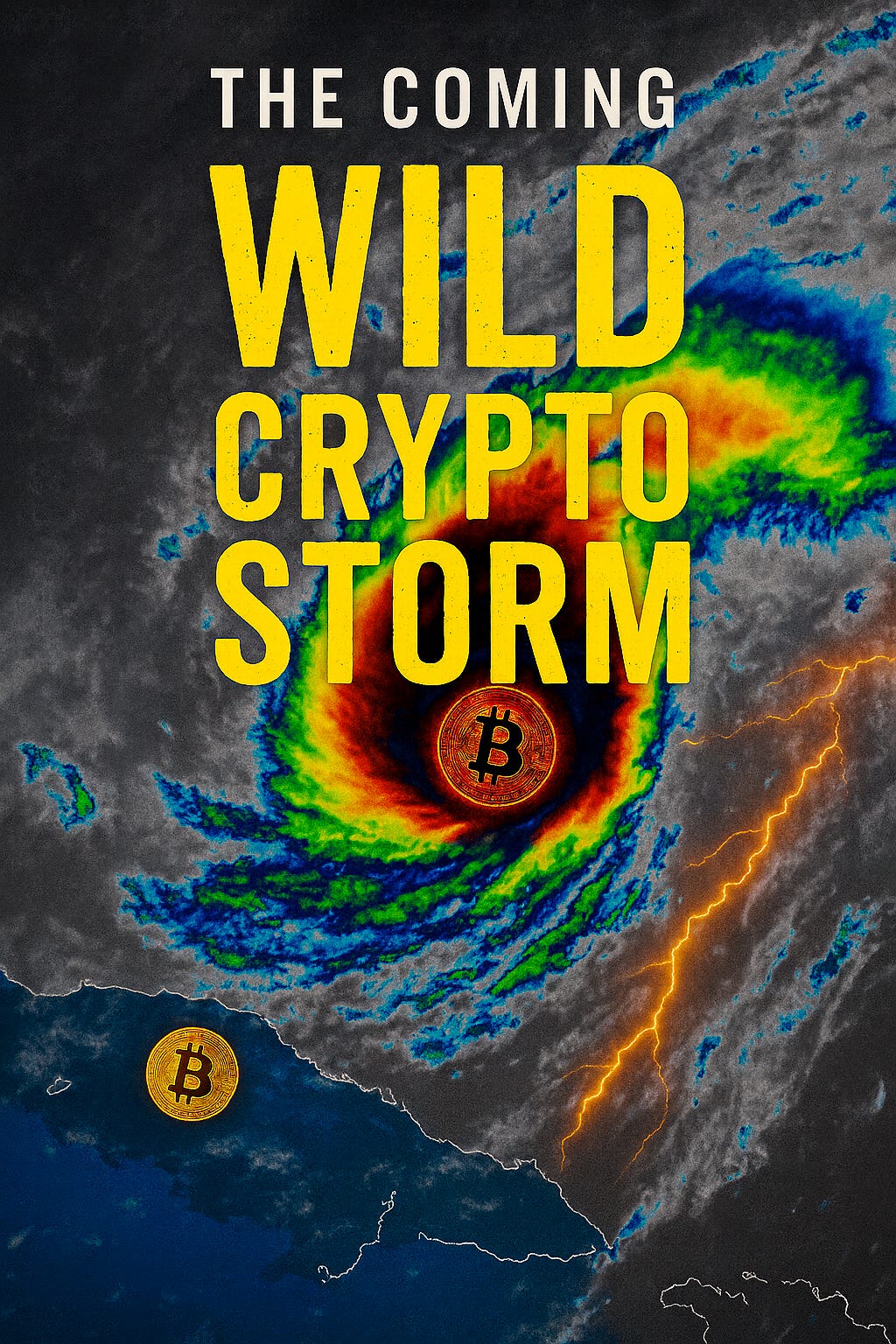
... Dedollarization and Crypto Imperialism: How U.S. Bitcoin Policy Threatens Small Nations’ Reserves
Dedollarization, a U.S. Dollar Crash, and Trump’s Crypto Imperialism:

[As dedollarization accelerates, the United States is pivoting toward cryptocurrency and deregulated stablecoins as an alternative financial architecture. In this deeply researched investigation, economic journalist Norris R. McDonald applies world-systems theory to examine how Trump-era crypto policy may externalize systemic risk onto small nations whose reserves, pensions, and remittances remain tied to U.S. financial institutions. The article raises urgent questions about financial sovereignty, digital corruption, and whether America’s Bitcoin gamble could quietly expropriate the wealth of vulnerable states].


By Norris R. McDonald, DIJ
Economic Journalist
Sulfabittas News Syndicate


[As the United States pivots toward cryptocurrency and deregulated stablecoins, small nations face growing risks to their foreign reserves. An in-depth investigation using world-systems theory].


A Tectonic Shift in the Global Financial Order

“We are in a tectonic era of political-economic crisis that world-systems theorist Immanuel Wallerstein would have called the terminal phase of international capitalism.”


This observation is no longer confined to academic debate. It now describes the lived reality of the global economy.


Across the world, governments are quietly preparing for a future beyond U.S. dollar dominance. Dedollarization—once dismissed as rhetorical defiance—has become a structural trend. Nations are reducing dollar exposure, developing alternative payment systems, and insulating themselves from financial shocks originating in the United States.

Simultaneously, the United States appears to be making a dramatic and dangerous pivot: embracing cryptocurrency as a geopolitical and fiscal escape route from mounting debt, industrial decline, and eroding monetary credibility.


At the center of this gamble is Donald Trump’s aggressive promotion of crypto assets, stablecoins, and deregulated digital finance—what critics increasingly describe as crypto imperialism.


For small nations whose reserves, pensions, remittances, and sovereign assets are tied to U.S.-linked financial institutions, a critical question emerges: could America’s crypto experiment place their national wealth at risk?


Trump’s Crypto Casino and the GENIUS Act

By legitimizing cryptocurrency as a strategic financial asset, the United States is constructing a parallel monetary system operating outside traditional central-bank oversight and long-standing regulatory safeguards.


Recent policy shifts confirm this direction. U.S. agencies, including the Federal Deposit Insurance Corporation, now permit banks to engage in crypto-related activities without prior regulatory approval, relying instead on assurances that institutions are “managing the risks.”


History suggests otherwise. When risk is privatized and losses are socialized, the most vulnerable actors—small states and working populations—pay first.


Countries with reserves and deposits held in U.S. banks, including Jamaica and other CARICOM economies, have no binding guarantees that their funds are insulated from crypto exposure, stablecoin volatility, or speculative digital instruments embedded in balance sheets.


The same exposure applies to diaspora populations whose retirement savings and remittances pass through U.S. financial intermediaries.


Conflict of Interest and Digital Corruption

Senator Elizabeth Warren has issued some of the strongest warnings, sharply criticizing Trump-era crypto legislation, particularly the so-called GENIUS Act. She has described it as a framework designed not to protect consumers or financial stability, but to enable corruption and self-enrichment.


Warren accused Trump of turning the White House into “a crypto casino where the house always wins—and the house is called Trump.”


Reports indicate that Trump-linked entities now control more than US$2 billion in crypto assets, swelling to as much as US$6 billion during market surges. Through World Liberty Financial, the Trump family has launched digital tokens such as WLFI and the USD1 stablecoin. Meme coins bearing the Trump name generate millions in speculative revenue, while First Lady Melania Trump has introduced her own $MELANIA token.


This convergence of political authority and speculative finance represents a profound governance failure with global consequences.


Crypto Imperialism and the Export of Crisis

Since the 1970s, the United States has struggled to maintain broad-based industrial growth. In its place, financialization—debt expansion, asset bubbles, and speculative instruments—has become the dominant survival strategy.


Immanuel Wallerstein’s world-systems theory offers a critical lens. In The Decline of American Power and World-Systems Analysis, Wallerstein argued that hegemonic powers in decline increasingly rely on fictitious capital while exporting instability to peripheral economies.


He identified key features of this terminal phase: declining productive capacity, explosive speculative finance, systemic crisis externalization, and the erosion of institutional legitimacy.


Cryptocurrency fits this pattern precisely. 


After the 2007–2008 financial crisis, Washington injected unprecedented liquidity into the global system. Crypto emerged as a shadow monetary sphere absorbing surplus capital disconnected from real economic activity. Today, with U.S. national debt exceeding US$37 trillion, digital assets offer an illusion of escape—inflating away obligations rather than confronting them.


Let's take a moment to digest this. This is not recovery. It is deferment through risk transfer.


Gambling Tokens Versus Productive Economies

American cryptocurrencies are speculative gambling instruments. They are created from thin air, powered by enormous electricity consumption, and backed primarily by hype, branding, and political endorsement.

They do not produce food, infrastructure, medicine, or sustainable employment.


By contrast, China’s digital yuan is backed by approximately US$3.3 trillion in foreign reserves derived from manufacturing, trade surpluses, and real production. One system is rooted in material output; the other in financial abstraction.


This distinction matters profoundly for nations deciding where to hold their reserves.


Dedollarization Is Accelerating

Around the world, states are building financial firewalls against U.S. instability. China expands the Belt and Road Initiative and promotes yuan-based trade. Russia, India, Saudi Arabia, and Qatar increasingly transact in national currencies. BRICS explores gold-backed settlement mechanisms. Africa develops the Pan-African Payment and Settlement System.


These developments reflect a growing consensus: dependence on a volatile, financialised dollar system is no longer safe.


America’s turn to crypto may delay its decline, but it cannot prevent it.


Jamaica, CARICOM, and Hidden Exposure

For Jamaica and the wider CARICOM region, vulnerability is structural. Foreign reserves remain overwhelmingly dollar-denominated. Remittances—essential to household survival—flow through U.S.-regulated banks now authorized to engage in crypto activities with limited oversight.

Developing countries like Jamaica, U.S. dollar financial reserves are at risk. 

Jamaica’s Jam-Dex represents cautious domestic digital innovation, but it does not protect reserves held abroad. If U.S. institutions integrate stablecoins or crypto-linked assets into treasury operations, Caribbean economies could face exposure without transparency or consent.


This is not conjecture. It is a governance blind spot.


Africa, BRICS, and the Search for Monetary Sovereignty

African economies confront a similar dilemma at greater scale. Historically bound to IMF-style debt dependency, many now see alternatives emerging.


China’s US$50 billion pledge following the 9th China–Africa Forum targets poverty eradication, food security, healthcare, and disease control. Russia, now the world’s fourth-largest economy by purchasing power parity, has expanded development and health cooperation across Africa despite sanctions.

IMF debt-driven policies worsens poverty in poor nations.

The rise of BRICS and its New Development Bank complements these shifts. With a capital base of US$100 billion, the NDB finances sustainable development projects without the ideological conditionalities attached to traditional Western lending.


Projects such as Egypt’s Suez Wind Energy initiative and multiple South African community investments demonstrate finance linked to production rather than speculation.


A Call for Transparency Before the Crash

Small nations cannot afford blind trust. Parliamentary inquiries into foreign reserve exposure, full disclosure of crypto-linked financial instruments, and robust public oversight are now essential.

Waiting for collapse before asking hard questions would be catastrophic.


Conclusion: A Global South Warning, Not a U.S. Debate

Senator Elizabeth Warren’s critique of Trump-era crypto policy is not a narrow fight over U.S. regulation—it is a warning to the world. Her condemnation of the GENIUS Act as a vehicle for deregulation, corruption, and self-enrichment exposes a deeper threat: the conversion of the U.S.-anchored financial system into a lightly governed crypto experiment whose risks are exported far beyond American borders. When the issuer of the world’s reserve currency abandons restraint, every nation tied to that system inherits the consequences.


For small and developing states, the exposure is concrete. Many Global South economies hold a majority of their foreign reserves in U.S. dollars or dollar-denominated institutions. Caribbean and African nations rely heavily on remittances—often exceeding 15–25 percent of GDP—channeled through U.S. banks and payment platforms. Pension funds, sovereign deposits, and correspondent banking relationships are deeply embedded in the American financial system. As U.S. banks and intermediaries are allowed to integrate crypto assets and stablecoins with minimal oversight, these external funds risk being indirectly entangled in volatile digital instruments, without consent, transparency, or legal protection.


Warren’s warning is ultimately about power without accountability. A deregulated crypto regime allows U.S. political and financial elites to privatize gains while externalizing losses—replicating imperial extraction in digital form. Small nations did not choose America’s crypto pivot, yet their reserves may be used to stabilize a speculative system designed to offset U.S. decline.


Dedollarization, in this context, is not rebellion—it is self-defense. The Global South must treat America’s crypto gamble as a systemic risk signal. Diversifying reserves, strengthening regional payment systems, demanding transparency from correspondent banks, and accelerating monetary cooperation are no longer optional strategies. They are survival imperatives. What is deregulated in Washington will not stay in Washington. If unchecked, it will be paid for in the balance sheets of the world’s most vulnerable economies.

The time to act is now. That’s the Bitta Truth.


Saturday, January 31, 2026

Shocking! Prescription Drug Errors Kill More Americans Than Medicinal Plants!


Prescription Drug Errors Kill More Americans Than Medicinal Plants: A Preventable Health Crisis

By Norris R. McDonald, Sulfabittas News (Updated, March 28, 2026)

Medication Error Statistics in the United States: A Growing Patient Safety Crisis. Prescription drug errors represent one of the most overlooked failures in the American healthcare system. While pharmaceutical innovation has transformed disease management, preventable medication mistakes continue to injure and kill Americans at alarming rates.

The U.S. Food and Drug Administration reports that medication errors harm at least 1.5 million people annually in the United States. These adverse drug events include prescribing mistakes, dosage miscalculations, pharmacy dispensing errors, and dangerous drug interactions.

Research affiliated with Johns Hopkins University has estimated that medical errors rank among the leading causes of death in America. While mortality estimates vary across studies, there is broad consensus among public health experts: preventable medical errors remain a systemic patient safety crisis.

Adverse Drug Reaction Deaths vs. Herbal Medicine Safety Data

When comparing pharmaceutical harm to medicinal plant use, the contrast is striking. Fatalities directly linked to properly identified and appropriately administered herbal remedies are comparatively rare.According to the National Center for Complementary and Integrative Health, part of the National Institutes of Health, most herbal-related complications arise from contamination, incorrect identification, excessive dosing, or drug-herb interactions — not from standard traditional use.

This does not imply herbal medicine is universally safe, nor that prescription drugs are inherently dangerous. It highlights a more uncomfortable truth: the scale of adverse drug reaction deaths within a tightly regulated pharmaceutical system demands scrutiny.

Preventable Medical Errors Inside a Highly Regulated Healthcare System

Unlike isolated herbal misuse cases, prescription drug errors occur within hospitals, long-term care facilities, and pharmacies operating under federal oversight.This raises critical healthcare policy questions. If advanced electronic health records, pharmacist verification systems, and federal drug safety regulations exist, why do preventable medication errors continue to claim lives?

Medication reconciliation failures, fragmented communication between providers, and systemic workflow breakdowns contribute significantly to the problem. These are not failures of pharmacology — they are failures of implementation and oversight.

More people have died from prescription drugs errors than from medicinal plants use--Medical study says.

Polypharmacy Risks in the Elderly and Chronic Disease Patients

One of the most dangerous drivers of medication-related harm is polypharmacy — the simultaneous use of multiple prescription drugs.

Older Americans and patients with chronic illnesses often take five, ten, or even more medications daily. Each additional drug increases the probability of dangerous interactions, organ stress, internal bleeding, or cardiac complications. As America’s population ages, the intersection of polypharmacy risks and preventable prescribing errors could expand the patient safety crisis unless healthcare quality reforms accelerate.

Global Patient Safety Initiatives and Healthcare Quality Reform

Medication safety is not just a domestic concern. The World Health Organization has identified medication-related harm as a global public health priority, estimating billions in avoidable healthcare costs annually due to preventable drug-related injuries.

Efforts to reduce medication errors include improved electronic prescribing systems, enhanced pharmacist integration, clearer labeling standards, and stronger patient education protocols. These reforms are not radical — they are evidence-based safeguards.

Healthcare Accountability, Transparency, and Systemic Reform

Prescription drugs save lives every day. Insulin prevents diabetic crises. Anticoagulants reduce stroke risk. Oncology drugs extend survival. The issue is not pharmaceutical science — it is systemic vulnerability.

When preventable medication mistakes result in thousands of deaths annually, accountability becomes a public health imperative. The conversation should not be framed as pharmaceuticals versus medicinal plants, but rather as safety systems versus systemic neglect. Reducing medication errors would not require dismantling modern medicine. It would require practicing it with greater precision, transparency, and oversight.

The tragedy is not that powerful drugs exist. The tragedy is that preventable errors persist in delivering them.


National Student Nurses Association Host 2026 Texas, Houston, Convention


Patient Safety is the most fundamental aspect of medicine including clinical nursing practices.

National Student Nurses Association to Host 2026 Annual Convention in Houston

By Patricia N. McKenzie, RN

The National Student Nurses Association (NSNA) has announced that its 2026 Annual Convention will take place April 8–11, 2026, in Houston, Texas, bringing together thousands of nursing students from across the United States for education, leadership development, and national networking.

Often described as a major professional CONFAB for student nurses, the annual NSNA convention provides a national forum for future nurses to exchange ideas, explore career pathways, and gain practical skills essential for success in today’s healthcare environment.

A key highlight of the 2026 convention will be the keynote address by Dr. Kellie Bryant, DNP, WHNP, CHSE, FSSH, FADLN, FAAN, a nationally respected nursing professor and healthcare leader. Dr. Bryant is widely recognized for her contributions to women’s health, simulation-based education, nursing leadership, and professional development. As a Fellow of the American Academy of Nursing and several other distinguished organizations, she has spent her career advancing excellence in nursing education and preparing the next generation of nurses for leadership and innovation in healthcare.

The NSNA Annual Convention is designed to offer both educational enrichment and professional exposure. Attendees will have access to a wide range of specialty nursing areas, interactive workshops, and educational sessions led by experienced nurse educators and healthcare professionals. These sessions are tailored to address current healthcare challenges and emerging trends in nursing practice.

One of the most anticipated features of the convention is the live NCLEX-RN Review, which provides students with evidence-based test-taking strategies, exam preparation guidance, and content reinforcement. Nursing students preparing for licensure will benefit from structured review sessions that aim to reduce exam anxiety while strengthening clinical reasoning skills.

It is crucial to be keen listener and at all times apply your critical thinking skills.

In addition to exam preparation, educational workshops will focus on leadership development, patient safety, mental health awareness, evidence-based practice, and professional communication. These sessions are designed to equip student nurses with the competencies needed to transition successfully from the classroom to clinical practice.

The convention also offers significant networking opportunities. Student nurses will have the chance to meet and engage with NSNA leadership, including members of the Board of Directors, the Nominating and Elections Committee, and the Chair of the Resolutions Committee. These interactions provide insight into nursing advocacy, organizational leadership, and opportunities for student involvement at the national level.

Beyond professional development, the event emphasizes collaboration and community. Nursing students from diverse backgrounds and institutions will connect, share experiences, and build professional relationships that often extend well beyond the convention.

Hosted in Houston, Texas, the 2026 NSNA Annual Convention combines education with an engaging conference environment, offering students the opportunity to learn, network, and enjoy one of the nation’s most dynamic cities.

The National Student Nurses Association Annual Convention continues to serve as a cornerstone event for nursing students, reinforcing the organization’s commitment to leadership, education, and the future of the nursing profession.


Friday, January 30, 2026

What Lies Beneath Jamaica’s Waters? Oil Exploration Could Threaten Beaches, Reefs and Jobs

Sulfabittas News reports on major Caribbean and global political developments affecting Jamaica and the wider region...

... Coral Reefs, Fisheries and Tourism at Stake in Jamaica Oil Debate!

Norris R McDonald

By Norris R. McDonald @sulfabittasnews

KINGSTON, Jamaica, SULFABITTAS NEWS SYNDICATE

Jamaica’s pristine beaches and fragile marine ecosystems could face significant environmental threats from proposed oil and gas exploration, prompting concern among environmental experts, tourism stakeholders, fishing communities, and civil society organizations.

As energy companies expand offshore exploration across the Caribbean, debate is intensifying over whether the potential economic benefits outweigh the environmental risks for small island states like Jamaica.

Oil Spill Risks in a Tourism-Dependent Nation

Oil spills remain one of the most serious dangers associated with offshore drilling. Accidents during exploration, drilling, or transportation can release oil into surrounding waters, contaminating beaches and nearshore ecosystems.

What lies below Jamaican waters? Oil and gas, but potential severe dangers to sea life and the island pristine beaches. 
“In a tourism-based economy like Jamaica’s, even a moderate oil spill could have devastating and long-lasting impacts,” said a marine environmental scientist with experience in Caribbean coastal systems. “Warm tropical waters make containment more difficult, and recovery is often slow or incomplete.”

Coral Reefs and Marine Ecosystems Under Pressure

Jamaica’s coral reefs are already under strain from climate change, pollution, and overfishing. Oil and gas exploration could intensify these pressures through drilling waste, accidental leaks, and reduced water clarity.

Environmental organizations, including the Jamaica Environment Trust (JET), have repeatedly warned that additional industrial activity could accelerate reef degradation.

“Coral reefs are not just underwater attractions — they are essential natural infrastructure,” a JET representative said. “Once they are damaged, beaches erode faster, fisheries decline, and coastal communities lose protection from storms.”

Damage to ecology is also a major risk. 

Seismic Surveys and Impact on Marine Life

Before drilling begins, oil companies typically conduct seismic surveys using powerful underwater sound waves to locate oil and gas deposits. Scientific research has linked these surveys to disruptions in marine mammal behavior, fish migration, and spawning patterns.

Fishing organizations, including members of the All-Island Fisherfolk Association of Jamaica (AIFAJ), have raised concerns about the impact on livelihoods.

“When fish move away from traditional fishing grounds, fishers feel it immediately,” an AIFAJ representative said. “Reduced catches affect income, food security, and entire coastal communities.”

Coastal Erosion and Loss of Natural Defenses

Oil and gas infrastructure, such as pipelines, ports, and support facilities, can damage mangroves and seagrass beds. These ecosystems serve as natural buffers against storm surges and coastal erosion.

Environmental planners note that Jamaica’s mangroves are already declining and that further degradation could increase vulnerability to hurricanes, flooding, and sea-level rise.

Tourism Industry Concerns

Tourism stakeholders have also expressed concern about the reputational risk associated with offshore drilling.

Industry representatives from groups such as the Jamaica Hotel and Tourist Association (JHTA) have previously emphasized that Jamaica’s competitive advantage lies in its clean beaches and natural beauty.

“Even the perception of pollution can affect bookings,” a tourism industry source noted. “Once confidence is lost, it can take years to rebuild.”

Government and Regulatory Response

Government officials have stated that any oil and gas exploration would be subject to strict environmental oversight. The National Environment and Planning Agency (NEPA) has emphasized that comprehensive Environmental Impact Assessments (EIAs) are required before approval of offshore activities.

In previous statements, NEPA has indicated that proposed projects must demonstrate minimal risk to marine ecosystems and coastal communities and comply with national environmental regulations.

The Ministry responsible for energy has also noted that Jamaica continues to explore a diversified energy mix, including renewable sources, while assessing potential fossil fuel resources.

Economic Trade-Offs and Long-Term Costs

Policy analysts caution that while oil and gas development may offer short-term revenue, environmental damage could undermine Jamaica’s long-term economic stability.

“Short-term extraction income must be weighed against long-term losses in tourism, fisheries, and coastal protection,” said a sustainable development policy analyst. “Once beaches and reefs are compromised, the economic consequences can last generations.”

A National Policy Crossroads

Jamaica’s energy decisions come amid global shifts toward renewable energy and climate-resilient development. Environmental and civil society groups argue that protecting beaches, reefs, and fisheries aligns more closely with the country’s long-term interests.

“The decisions made now will define Jamaica’s coastline for decades,” one environmental advocate said. “This is about choosing resilience over risk.”

Peenie Wallie: 'A Fool’s Light' That Brought Fame To Rural Jamaica!- Inspirational Narrative Fiction

BOOK: Genre: Biographical Fiction / Caribbean Literature
Peenie Wallie Coromantee Maroon, Firefly, Ancestral, Godmother, kept a constant watch over his life.


Book Review: 

Peenie Wallie: The Glow of a Fool’s Light! by Norris R. McDonald  

Author: Norris R. McDonald
Genre: Biographical Fiction / Inspirational / Caribbean Literature
Setting: Epsom District, St. Mary, Jamaica
Themes: Resilience, Education, Community, Spirituality, Hope, Jamaican Heritage


Peenie Wallie would speak to his Ancestral, Spiritual, FireFly God-Mother, before laying down to sleep in the bushes by the river. 

Peenie Wallie: The Glow of a Fool’s Light! is a powerful, heart-stirring novel based on true-life events that illuminates the triumph of the human spirit against poverty, misunderstanding, and social injustice. Acclaimed Jamaican author and journalist Norris R. McDonald delivers an emotionally rich story rooted deeply in Jamaica’s rural landscape, cultural memory, and ancestral spirituality.


Annotto Bay Market, St. Mary, is a key center of rural Jamaican life, where vendors sell agricultural products and, young people meet and socialize.  


Set in the picturesque yet challenging community of Epsom, St. Mary, the novel follows the life of Peenie Wallie, a young orphan mocked for his innocence and misunderstood brilliance. His world is shaped by hardship, but also by love, faith, and unseen spiritual forces symbolized by his glowing fireflies—a recurring metaphor for hope and destiny.
The story unfolds through unforgettable characters:

  • Aunt Sissy, the embodiment of sacrificial love and quiet strength
  • Peenie Wallie, whose fireflies symbolize inner light and resilience
  • Mass Moses, a Maroon spiritual leader channeling ancestral wisdom
  • Sheldon, a long-lost benefactor who alters the course of Peenie’s life
McDonald skillfully explores themes of rural poverty, internal migration, education, self-development, kindness, and community spirit versus selfishness. The ancestral presence of the African Coromantee Maroons weaves a spiritual undercurrent throughout the narrative, grounding the novel in Jamaica’s Afro-centric heritage and collective memory.


As Peenie Wallie rises from a ridiculed outcast to a respected journalist and community builder, the village of Epsom itself is transformed. Education initiatives, cultural pride, and opportunity reshape what was once a symbol of struggle into a beacon of progress. The “Glowing House of Epsom”, filled with photographs, awards, and memories, stands as a cultural landmark honoring Peenie Wallie and Aunt Sissy’s legacy.


The lush gardens surrounding the home reflect the natural beauty of St. Mary, Jamaica, mirroring the growth, healing, and renewal that define Peenie Wallie’s journey. His fireflies endure as a timeless symbol: even the smallest light can guide generations.


The picturesque, lush, beautiful countryside of Jamaican Coromantee Maroon Country, in Epsom, St. Mary. 


As noted in the Jamaica Gleaner (February 17, 2025), this novel is “an inspiring tale of resilience and triumph.” McDonald’s storytelling is immersive, compassionate, and deeply human—reminding readers that no one is truly forgotten, and that kindness can indeed change the world.


Peenie Wallie: The Glow of a Fool’s Light! is more than a book—it is a celebration of Jamaican identity, ancestral spirit, and the unstoppable power of hope. A must-read for lovers of Caribbean literature, inspirational biographies, and stories that shine light in dark places.


CLICK THIS LINK TO GET  'Peenie Wallie:the Glow of A Fool's Light'  OR, SCAN QR Code below! 


Peenie Wallie despite being a destitute orphan, grew up with pride after being adopted by Auntie Sissy.


Aunt Sissy, a kind old lady, with her adopted son Peenie Wallie. When all seemed lost, Aunt Sissy saved Peenie Wallie from hopelessness, homelessness, poverty and destitution. Peenie Wallie's life is a true story of love, kindness, caring, sharing, resilience and hope. 

Thursday, January 29, 2026

How Zohran Mamdani and Gen Z Shocked New York’s Political Elite!


The ‘Bitta’ Truth: Zohran Mamdani and Gen Z’s Political Earthquake

By Norris R. McDonald
Author | Economic Journalist | Human Rights Activist (SULFABITTAS NEWS, MODIFIED)

Norris R. McDonald

Zohran Mamdani’s landslide victory was not just a mayoral upset — it was a political rupture. In one election, Gen Z delivered its most decisive blow yet to America’s billionaire-dominated political system.

The Ugandan-Indian Democratic Socialist didn’t merely defeat New York’s political old guard — he dismantled it. By openly confronting donor-class politics, entrenched party power, and foreign-policy hypocrisy, Mamdani exposed how hollow establishment politics has become.

This election wasn’t driven by fear. It was driven by justice, peace, economic dignity, and a generation unwilling to inherit a broken system in silence.

It is the loudest political thunderclap Gen Z has ever dropped on America’s billionaire-controlled political system.

A self-declared Democratic Socialist with Ugandan-Indian roots, Mamdani didn’t just defeat New York’s political old guard — he humiliated it. By openly challenging donor-class politics, Zionist lobbying, and foreign-policy cowardice, Mamdani exposed how hollow both major parties have become.
The election was not about fear. It was about justice, peace, economic dignity, and political courage.

How a 34-Year-Old Democratic Socialist Beat New York’s Establishment 

At just 34 years old, Zohran Mamdani achieved what many believed was impossible: he defeated establishment Democrats, including Andrew Cuomo, to become Mayor of New York City.


His campaign was powered by grassroots organizing, not corporate donations. It united a broad coalition of young voters, immigrants, working-class families, and even disillusioned MAGA voters who are tired of billionaire domination and performative politics.

Mamdani’s victory sends a clear message: America’s political establishment no longer speaks for the people.

Gen Z’s Rebellion Against Corporate and Donor-Class Politics

This election represents a decisive rejection of policies that favor corporate interests over human lives. For decades, poor and middle-class Americans have been sidelined while millionaire and billionaire donors dictated domestic and foreign policy.

Mamdani’s platform challenged this corruption head-on, with progressive positions on healthcare, climate justice, workers’ rights, and social and economic equality.

These issues resonate deeply in a political system where campaign donors, not voters, shape outcomes.

 Challenging Zionist Lobbying and Foreign-Policy Cowardice

Mamdani’s historic victory carries enormous political symbolism. Throughout his campaign, he openly criticized U.S. foreign policy, particularly Israel’s actions in Gaza, which he courageously labeled “genocide.”

Unlike establishment politicians, Mamdani refused to retreat from a human-rights-based position, even under intense pressure from powerful lobbying groups.

Despite coordinated attacks from AIPAC and political elites who attempted to smear him as antisemitic, Mamdani earned support from 43% of New York’s Jewish voters, rejecting the false claim that opposition to Zionism equals antisemitism.

What Mamdani’s Win Means for America’s Political Future

Mamdani’s success reveals a profound shift in American politics. Traditional alliances between U.S. politicians and Zionist lobbying groups are no longer guaranteed.

Even within the MAGA movement, cracks are forming. Influential figures such as Tucker Carlson, Candace Owens, and Marjorie Taylor Greene have begun openly questioning America’s unconditional fealty to Zionism and endless foreign wars.

This cross-ideological reckoning proves one thing: a political movement rooted in human rights transcends party lines.

Zohran Mamdani’s victory is not just a win for New York. It is a warning to America’s political elite.

Gen Z has entered the arena — and they are not asking for permission.

The empire is trembling.

[ABOUT THE AUTHOR:
Norris R McDonald, is an Author, Respiratory Therapist and Economic Journalist who writes public commentary features for The Jamaica Gleaner. He writes on critical issues regarding Political Economics, Health Care & Public Policies, Black Culture and, World Affair. He also Publishes

SULFABITTAS NEWSMAGAZINE on SUBSTACK]


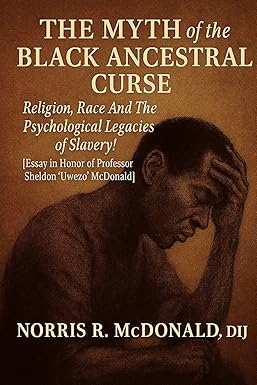
The Myth of the Black Ancestral Curse: How Religion Was Used To Justify Slavery!


Norris R. McDonald, DIJ CRT, Author, Economic Journalist & Human Rights Activist 

Myth of the Black Ancestral Curse is a critical study of  phycological legacies of slavery and the role religion and race plays in reenforcing racist stereotypes. 

This book:

  • Deconstructing the Curse of Ham, Colonial Lies, and the Struggle for Black Liberation
  • How Slavery, Religion, and Myth Created Generational Trauma—and How We Break Free
  • Unmasking Religious Racism and Reclaiming Black Spiritual Freedom

For centuries, Black people have been told that their suffering is divine punishment—ordained by God and passed down through a mythical “ancestral curse.”

In this powerful, eye-opening work, Norris R. McDonald, DIJ, dismantles one of the most enduring and damaging lies in Christian history: the so-called 
Curse of Ham. From the hymnals of colonial churches to the halls of modern academia, this myth has been used to justify slavery, colonization, and systemic racism.

With clarity, historical depth, and spiritual conviction, McDonald traces how scripture was distorted, how Black history was erased, and how liberation must begin with truth.

Drawing from the Bible, classical history, and Black theological thought, this short but impactful book challenges readers to confront religious indoctrination, reclaim their dignity, and break spiritual chains that have lasted for generations.
Whether you're a student of theology, an activist for racial justice, or a seeker of historical truth—
The Myth of the Ancestral Curse will inspire, inform, and empower you.


The Myth of the Black Ancestral Curse is a bold and revelatory work that exposes how colonial powers distorted Christian doctrine to justify the enslavement of Black people. From the Curse of Ham to papal decrees that sanctioned genocide, Norris R. McDonald, DIJ dismantles centuries of theological manipulation and calls for spiritual truth, historical clarity, and psychological healing.

This book is a journey—from ancient African greatness to colonial oppression, from religious lies to liberation theology. A must-read for seekers of justice, students of history, and defenders of faith rooted in freedom.

We are not cursed. We are called.
The Myth of the Black Ancestral Curse is a bold and revelatory work that exposes how colonial powers distorted Christian doctrine to justify the enslavement of Black people. From the Curse of Ham to papal decrees that sanctioned genocide, Norris R. McDonald, DIJ dismantles centuries of theological manipulation and calls for spiritual truth, historical clarity, and psychological healing.

This book is a journey—from ancient African greatness to colonial oppression, from religious lies to liberation theology. A must-read for seekers of justice, students of history, and defenders of faith rooted in freedom.


Titled ‘The Myth of the Black Ancestral Curse: Religion, Race and the Psychological Legacies of Slavery’, this provocative and deeply researched essay confronts the historical and spiritual abuse of sacred texts that helped legitimise slavery, colonialism, and systemic racism.

“This is more than a critique – it is an act of intellectual liberation,” McDonald said. “The myth of a divine curse on Black people is not just false – it was fabricated to justify mass atrocities and to psychologically shackle generations of African descendants.”

The book pays special tribute to Professor Sheldon ‘Uwezo’ McDonald, a Caribbean legal scholar and revolutionary whose life and work inspired this essay. Drawing from Caribbean history, Pan-African philosophy, and biblical critique, McDonald examines how European empires - backed by religious institutions - constructed a theology of racial inferiority that lingers today in both church and state.

BOOK REVIEW: JAMAICA GLEANER
‘The Myth of the Black Ancestral Curse’

Norris R McDonald’s new book dismantles dangerous religious myth used to justify slavery and colonialism

“Our ancestors were never cursed – they were targeted. And now it is time to reclaim the truth.”

A powerful new work by Jamaican author and public intellectual Norris R. McDonald, DIJ, is taking aim at one of the most insidious and enduring lies used to oppress Black people across the globe: the so-called Black Ancestral Curse.

KEY TOPICS EXPLORED:

• The origins and misuse of the so-called “Curse of Ham” doctrine

• How religious institutions gave moral cover to slavery and colonisation

• The psychological legacy of spiritual indoctrination in Black communities

• Resistance through Rastafari, Maroon heritage, and African spirituality

• A poetic invocation of liberation in the included poem ‘DRUMS’

• A moving tribute to Prof. Sheldon ‘Uwezo’ McDonald and his legacy

“This essay is a celebration of Black excellence and a call to reject inherited shame,” McDonald noted. “Our ancestors were never cursed – they were targeted. And now it is time to reclaim the truth.”

Published by Afro Caribbean Riddims via Amazon KDP, ‘The Myth of the Black Ancestral Curse: Religion, Race, and the Psychological Legacies of Slavery’ is available now in paperback and eBook on Amazon Kindle Direct Publishing (KDP)

About the author

Norris R. McDonald, DIJ, CRT, is a storyteller, cultural researcher, wordsmith and poet from the heart of Jamaica. His work blends humor, history, and heritage to preserve the vibrant spirit of the Caribbean. With a voice as powerful as Granny’s slap and a pen dipped in sweet potato pudding, McDonald brings island folklore to life for readers across generations and continents. Norris is an Author, Respiratory Therapist and Economic Journalist who writes public commentary. features for the Jamaica Gleaner. He writes on critical issues regarding Political Economics, Health Care & Public Policies, Black Culture and, World Affairs.