Sulfabittas News reports on major Caribbean and global political developments affecting Jamaica and the wider region...
God King Trump Wages War Like Don Quixote Chasing
Windmills While 1,100 U.S. Counties Lack Maternity Care
Hospitals!
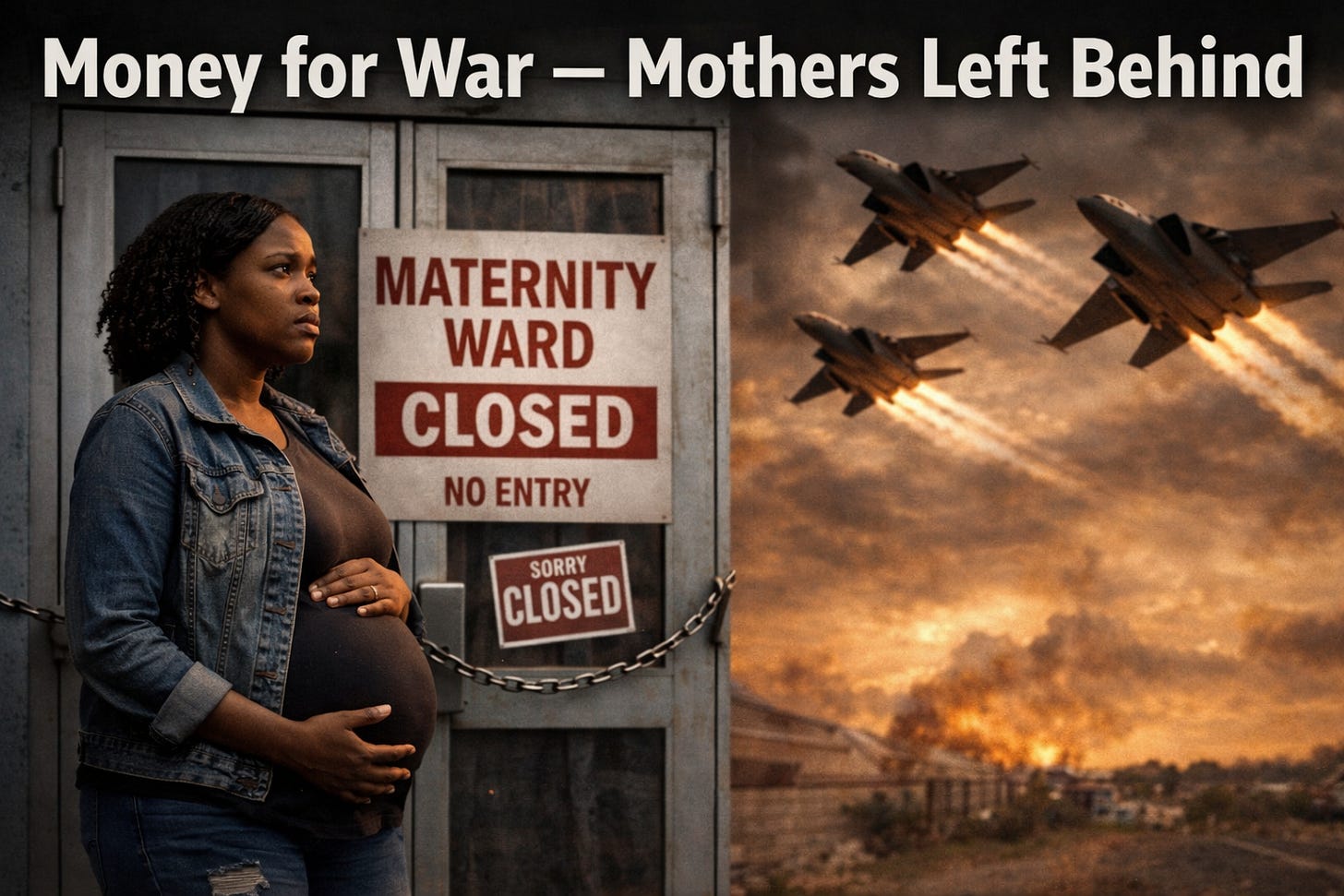 |
| Over 1,100 American counties have no maternity healthcare clinics even as President Donald Trump waste billions of dollars on illegal regime-change wars. |
By Norris R. McDonald, DIJ, Author & Economic Journalist

Norris R. McDonald
The Middle East is on fire again. Following America and Israel’s attack on Iran and the killing of the Islamic Republic’s Supreme Leader, Ayatollah Ali Khamenei, the backlash has already started. Iran attacks American military bases, embassies in 10 Arab nations.
 |
| Norris R. McDonald |
The Middle East is on fire again. Following America and Israel’s attack on Iran and the killing of the Islamic Republic’s Supreme Leader, Ayatollah Ali Khamenei, the backlash has already started. Iran attacks American military bases, embassies in 10 Arab nations.
When war beckons, American politicians
don't ask: "How to pay for it.?”
They simple cheer, run up the massive debt and cut poor people out the budget.
The current Middle East crisis is no exception. It is a revealing case study in national priorities.
What is the background to this crisis?
THE ROOTS OF AMERICA’S IRAN CONFRONTATION
The roots of U.S.-Iran confrontation stretch back decades. American C.I.A regime-change policies helped shape the present crisis. In 1979 the Islamic Revolution overthrew the CIA-backed Shah Reza Pahlavi. Today’s escalation therefore sits atop a long history of intervention, sanctions, covert operations, and proxy conflict.
Meanwhile, the Palestinian resistance against Israel’s illegal occupation and annexation of the lands is an unsettled issue that goes back to the 1944 partition of their land.
American intervention in the Middle East, strengthens and facilitates Israel’s illegal occupation, land-grabbing polices and most recently, the genocide in Gaza.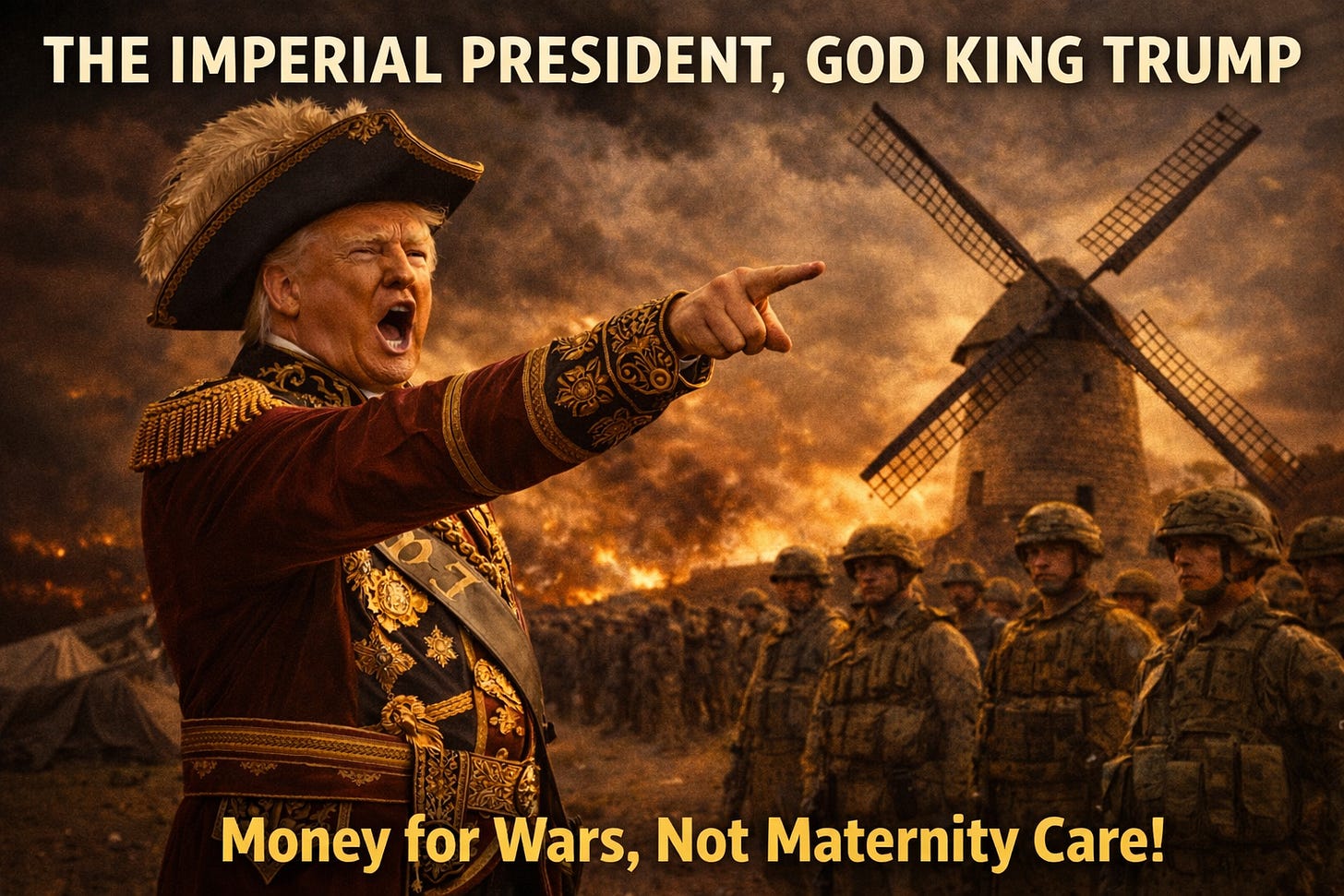
Trump’s America today, that is shamelessly masquerades as a moral arbiter of peace, has destabilized the world, from Asia, Africa, Latin America and the Caribbean and now the Middle East.
This interventionist policy was on show in the brazen attack on Venezuela to control its oil and, in the kidnapping of President Nicolas Maduro and First Lady Cilia Flores. It also includes a brutal imposition of a food and oil embargoes on Cuba.
My dear friends, wars of conquest, appear to be the very reason for America’s existence.
With an annual expenditure of over US$800 billion, the United States spends more on its military than most nations.

On the flip side, when it comes to meeting human needs of its citizens that is never accepted as national priority.
This contrast is not merely budgetary, it is immoral.
Over 15 million Americans remain uninsured following reductions in healthcare subsidies under the Affordable Care Act.
Rural hospitals are closing at alarming rates due to reimbursement pressures and funding gaps. Community health centers struggle to remain solvent. Yet major defense contractors report record revenues, and weapons manufacturers see stock prices surge during periods of geopolitical tension.
This is what economists call opportunity cost. Every dollar committed to sustained military expansion is a dollar unavailable for preventive care, maternal health infrastructure, or rural hospital stabilization.
Policymakers often deny a direct trade-off. They argue that defense and domestic spending occupy separate lanes. But budgets are finite political documents. Priorities are reflected in allocation speed, political will, and legislative urgency.
WHEN WAR COMES HOME
Nevertheless, America’s wars, especially in the Middle East, have extreme negative consequences on people’s pocketbooks throughout the world.
The Middle East controls a significant share of global petroleum exports. Instability drives oil price spikes. Higher oil prices ripple outward — raising transportation costs, food prices, electricity bills, and inflationary pressure.
Oil prices have now spiked to US$73 dollar per barrel with the potential to reach US$100 per barrel.
For fragile economies such as Jamaica this is extremely bad news. The hidden tax of war driven oil-spikes is paid at grocery stores, gas stations, in light bills and other basic costs.
THE MATERNITY CRISIS AS POLICY FAILURE
My dear friends, we are in truly challenging times. But if one wants a clear illustration of distorted priorities, an example is America’s maternity care crisis.
Right now, while god king Trump, wages war like Don Quixote chasing windmills, America has more than 1,100 counties without maternity healthcare hospitals clinics. And that is just one example of misplaced priorities.

Women dying from pregnancy is in the United States exceeds that of other wealthy nations.
In the case of pre-eclampsia, and other life-threatening conditions that require rapid intervention, minutes matter. But, by closing maternity health clinics America has created what is called “maternity care deserts” – places that are as bleak as the barren wilderness, where pregnancy appears to be a disease and not a life-changing opportunity for family development.
Pregnant women often travel hours to deliver. Some give birth in transit. Some lose infants before reaching care.

Wars are profitable for empires, millionaires and billionaires; maternity clinics are not.
Clearly, if maternal survival were treated as a national security issue, funding streams would reflect it. Emergency appropriations would stabilize obstetric care in under served counties.
THE MORAL CHOICE, WAR PROFITEERS OVER PEOPLE
Strip away partisan rhetoric and the question becomes unavoidable: What is government for?
Is it primarily an instrument of global dominance and strategic leverage? Or is it a guarantor of human security at home — healthcare access, maternal survival, food stability, and dignified work?
Is it to expand influence, topple regimes and dominate rival powers? Or is it to ensure that mothers survive childbirth, that children receive medical care, that workers earn livable wages and that communities remain stable?
History teaches that empires decline not merely because of external enemies, but because they neglect foundations at home.
Budgets are moral documents. They reveal what a nation values most urgently.
The present Middle East crisis is a mirror. It reflects a governing philosophy in which military escalation activates immediate consensus, while maternal health remains negotiable.
Money for wars. Maternity wards closing. Rapid mobilization for regime change. Pregnant women driving across county lines in search of care.
These are not unrelated phenomena. They are the product of strategic choices.
The moral choice is stark. Oh yes! Money for war, not healthcare. Funding for regime change, not prenatal clinics.
Really, is this a society organized around human justice?
I think not!
That is just the bitta truth.
About the Author
Norris R. McDonald is an author, respiratory therapist, and economic journalist whose work focuses on political economy, public health, healthcare systems, and global public policy. He is a regular contributor of public commentary and analysis for the Jamaica Gleaner, where he examines the intersection of economics, governance, social justice, and development in Jamaica, the Caribbean, and the Global South.
With professional training in respiratory care and decades of frontline healthcare experience, McDonald brings a clinical and evidence-based perspective to issues such as maternal mortality, health inequities, pharmaceutical policy, and healthcare access. His journalism blends data-driven analysis with historical and cultural context, particularly around Black communities, post-colonial development, and structural inequality.
McDonald is also the publisher of Sulfabittas Newsmagazine on Substack, where he produces investigative features, long-form essays, and geopolitical commentary on global power dynamics, economic sovereignty, and emerging multipolar realities.