Russia’s Urgent Oil Lifeline Tests the Limits of the Drastic American Embargo!

Building Power: Cuban workers install solar panels as the country races toward energy independence.

Building Power: Cuban workers install solar panels as the country races toward energy independence.
By Norris R. McDonald
Sulfabittas: Caribbean Political Analysis
 |
| Norris R. McDonald |
At a time when U.S. political rhetoric has sharpened—hinting that Cuba could become a renewed focus of pressure following tensions elsewhere—Russia’s involvement underscores a shifting reality. The embargo remains in place, but its effectiveness is increasingly diluted by alternative alliances and parallel supply channels.
 |
| Living in the Dark: Energy shortages continue to shape daily life across Cuba. |
For ordinary Cubans, however, the stakes are far more immediate. Fuel shipments are not abstract geopolitical signals—they determine whether buses run, whether lights stay on, and whether basic economic life can function.
An Economy Under Economic Siege
Cuba’s economic condition reflects decades of constrained access to global markets, financing, and energy supplies. The embargo, layered with financial restrictions, has produced a system defined less by temporary crisis and more by structural limitation.
Fuel shortages continue to ripple across the economy, disrupting transportation, agriculture, and industrial output. Electricity instability remains a persistent feature of daily life, with rolling blackouts affecting households and businesses alike.
Inflationary pressures, driven by scarcity and import dependence, have eroded purchasing power. In this environment, survival often depends on improvisation—whether through informal markets, remittances, or community-level resilience.
Economists increasingly describe Cuba’s situation not as a cyclical downturn, but as a long-term imbalance shaped by restricted access to capital, technology, and energy.
Solar Energy: From Policy Option to National Necessity
Against this backdrop, Cuba’s aggressive push into solar energy is no longer an environmental initiative—it is an economic survival strategy.
The government is targeting approximately 2,000 megawatts of solar capacity by 2028, aiming to reduce dependence on imported fossil fuels and stabilize the national grid. The urgency is clear: energy independence is no longer optional.
 |
| Shifting Alliances: Cuba navigates between U.S. pressure and emerging global partnerships. |
Across rural and semi-urban landscapes, solar installations are expanding, supported by international partnerships and state-led coordination. The visual shift is striking—fields once defined by agricultural output are now increasingly dotted with photovoltaic arrays.
Yet the transition remains incomplete. Limited battery storage capacity means that solar generation largely disappears after sunset, leaving the grid vulnerable to the same instability it seeks to overcome. Without significant advances in storage infrastructure, the system cannot yet deliver full reliability.
Still, the direction is unmistakable. Solar power represents Cuba’s clearest pathway toward breaking the cycle of fuel dependency.
China and Russia Deepen Strategic Support
Cuba’s energy transition is being underwritten by expanding cooperation with China and Russia—relationships that now extend well beyond symbolic diplomacy.
China has emerged as a key supplier of solar technology, financing, and infrastructure development. Its role reflects a broader strategy of engagement across the Global South, where energy investment often doubles as geopolitical influence.
Russia, meanwhile, continues to provide critical energy support, including oil shipments that help stabilize short-term supply gaps. Beyond energy, Russian cooperation also extends into broader economic and technical assistance.
Together, these partnerships are increasingly aligned with Cuba’s engagement with BRICS-linked economies, offering alternative pathways to financing and development outside traditional Western systems.
Humanitarian and Medical Support Cushion the Crisis
Beyond energy, Cuba has also benefited from targeted humanitarian assistance aimed at preventing deeper economic collapse.
International partners—including China, Russia, and other allied nations—have contributed medical supplies, pharmaceuticals, and limited financial support to help sustain the country’s renowned but strained healthcare system. This assistance is particularly critical given Cuba’s dual challenge: maintaining universal healthcare while facing shortages of equipment, medicine, and energy to power facilities.
Food aid, technical cooperation, and logistical support have also played a role in cushioning the most severe impacts of the crisis. These interventions, while not transformative on their own, act as stabilizing forces in a system under sustained pressure.
Structural Constraints Still Limit Immediate Gains
Despite these developments, Cuba’s structural challenges remain formidable.
Energy storage continues to be the weakest link in the renewable transition, limiting the effectiveness of solar expansion. At the same time, restricted access to international credit markets slows infrastructure modernization and broader economic reform.
The result is a paradox: visible progress in renewable capacity alongside persistent instability in everyday energy supply.
This gap between capacity and reliability defines the current phase of Cuba’s transition—one marked by forward movement, but constrained by systemic limitations.
A Caribbean Geopolitical Realignment
Cuba’s evolving situation reflects a wider shift in Caribbean geopolitics, where global power competition increasingly shapes local economic realities.
The combination of U.S. pressure, Russian energy support, and Chinese investment signals the emergence of a more multipolar regional dynamic. Smaller states are no longer confined to a single sphere of influence—they are navigating between competing powers in search of economic survival and strategic advantage.
For Cuba, this balancing act is not ideological—it is existential.
Conclusion: Energy, Survival, and Strategic Defiance
Cuba’s current trajectory reveals a nation operating under dual pressures: external geopolitical tension and internal economic necessity.
Russian oil shipments may provide temporary relief, but they do not resolve the deeper structural issues. Solar energy offers a long-term pathway, but one still constrained by infrastructure gaps and financial limitations.
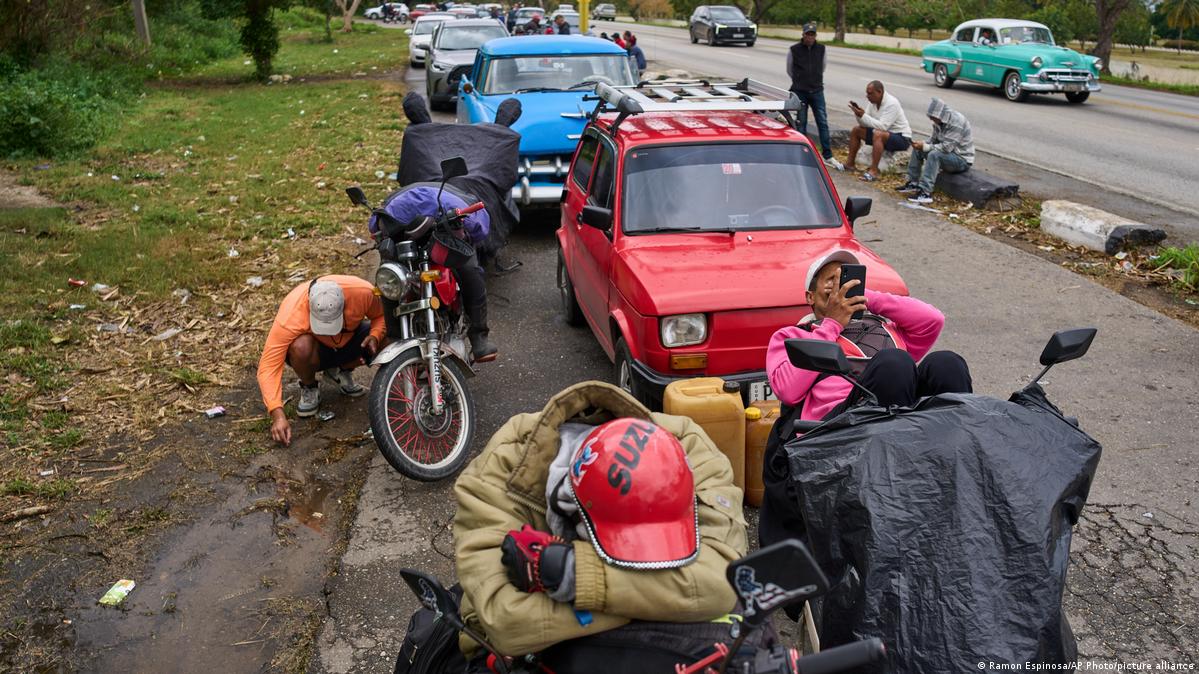
 |
| Innovation Under Pressure: Cubans improvise fuel alternatives in the face of scarcity. |
What is clear, however, is that Cuba is no longer passively absorbing pressure. It is adapting—through diversification, international partnerships, and a determined push toward energy independence.
The outcome remains uncertain. But the direction is unmistakable.
Cuba is not standing still—it is recalibrating under pressure
_____________________
Copyright 2026- Norris R. McDonald, SULFABITTAS NEWS, @sulfabittas
About the Author
Norris R. McDonald is an author, respiratory therapist, and economic journalist whose work focuses on political economy, public health, healthcare systems, and global public policy. He is a regular contributor of public commentary and analysis for the Jamaica Gleaner, where he examines the intersection of economics, governance, social justice, and development in Jamaica, the Caribbean, and the Global South.
_____________