Showing posts with label Middle East Analysis. Show all posts

Wednesday, March 4, 2026

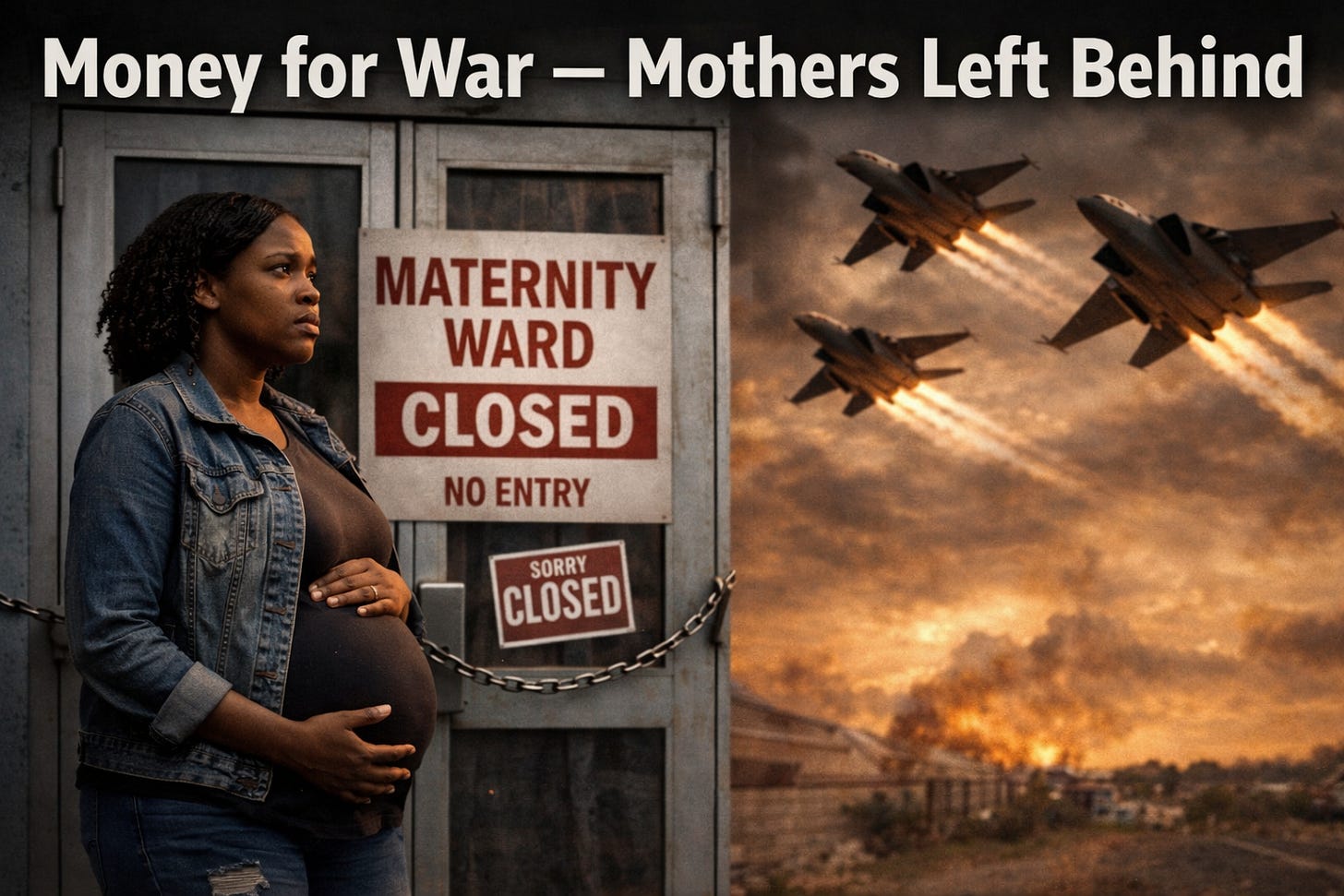
America’s Priorities: Money For Wars, Not Maternity Care!

God King Trump Wages War Like Don Quixote Chasing Windmills
While 1,100 U.S. Counties Lack Maternity Care Hospitals!

By Norris R. McDonald, DIJ, Author & Economic Journalist
Norris R. McDonald 

T
he Middle East is on fire again. Following America and Israel’s attack on Iran and the killing of the Islamic Republic’s Supreme Leader, Ayatollah Ali Khamenei, the backlash has already started. Iran attacks American military bases, embassies in 10 Arab nations.
But when war beckons, the United States politicians do not ask how to “pay for it.”
They simple cheer, run up the massive debt and cut poor people out the budget.
The current Middle East crisis is no exception. It is a revealing case study in national priorities.
What is the background to this crisis?
THE ROOTS OF AMERICA’S IRAN CONFRONTATION


The roots of U.S.-Iran confrontation stretch back decades. American C.I.A regime-change policies helped shape the present crisis. In 1979 the Islamic Revolution overthrew the CIA-backed Shah Reza Pahlavi. Today’s escalation therefore sits atop a long history of intervention, sanctions, covert operations, and proxy conflict.
Meanwhile, the Palestinian resistance against Israel’s illegal occupation and annexation of the lands is an unsettled issue that goes back to the 1944 partition of their land.
American intervention in the Middle East, strengthens and facilitates Israel’s illegal occupation, land-grabbing polices and most recently, the genocide in Gaza.
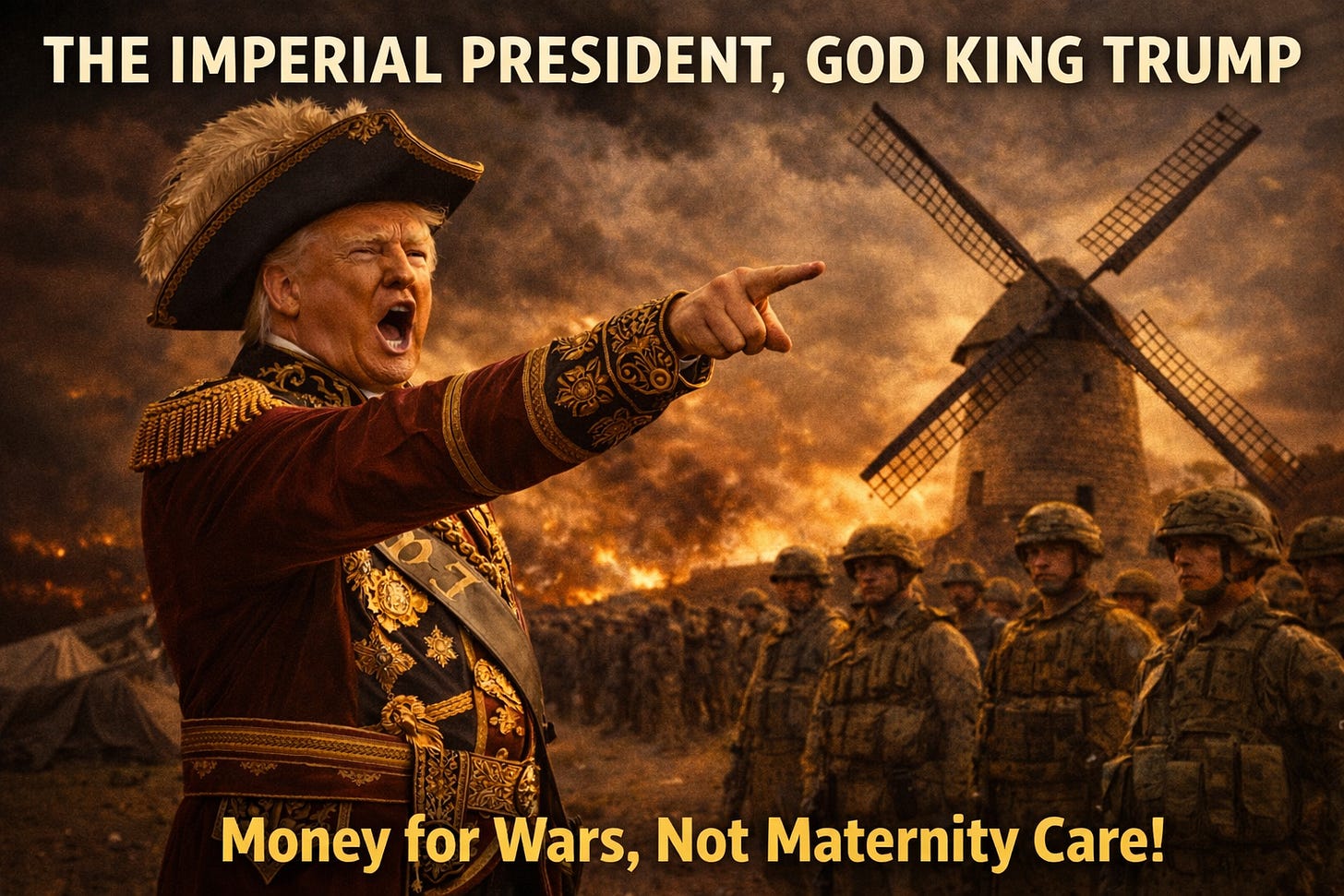
Trump’s America today, that is shamelessly masquerades as a moral arbiter of peace, has destabilized the world, from Asia, Africa, Latin America and the Caribbean and now the Middle East.
This interventionist policy was on show in the brazen attack on Venezuela to control its oil and, in the kidnapping of President Nicolas Maduro and First Lady Cilia Flores. It also includes a brutal imposition of a food and oil embargoes on Cuba.
POOR PEOPLE CUT OUT OF THE US BUDGET

My dear friends, wars of conquest, appear to be the very reason for America’s existence.


With an annual expenditure of over US$800 billion, the United States spends more on its military than most nations.


On the flip side, when it comes to meeting human needs of its citizens that is never accepted as national priority.


This contrast is not merely budgetary, it is immoral.


More than 40 million Americans live in poverty. Millions more hover just above it. Medical debt remains one of the leading causes of personal bankruptcy. 

Over 15 million Americans remain uninsured following reductions in healthcare subsidies under the Affordable Care Act.


Rural hospitals are closing at alarming rates due to reimbursement pressures and funding gaps. Community health centers struggle to remain solvent. Yet major defense contractors report record revenues, and weapons manufacturers see stock prices surge during periods of geopolitical tension.


This is what economists call opportunity cost. Every dollar committed to sustained military expansion is a dollar unavailable for preventive care, maternal health infrastructure, or rural hospital stabilization.


Policymakers often deny a direct trade-off. They argue that defense and domestic spending occupy separate lanes. But budgets are finite political documents. Priorities are reflected in allocation speed, political will, and legislative urgency.


WHEN WAR COMES HOME

Nevertheless, America’s wars, especially in the Middle East, have extreme negative consequences on people’s pocketbooks throughout the world.


The Middle East controls a significant share of global petroleum exports. Instability drives oil price spikes. Higher oil prices ripple outward — raising transportation costs, food prices, electricity bills, and inflationary pressure.


Oil prices have now spiked to US$73 dollar per barrel with the potential to reach US$100 per barrel.


For fragile economies such as Jamaica this is extremely bad news. The hidden tax of war driven oil-spikes is paid at grocery stores, gas stations, in light bills and other basic costs.


THE MATERNITY CRISIS AS POLICY FAILURE

My dear friends, we are in truly challenging times. But if one wants a clear illustration of distorted priorities, an example is America’s maternity care crisis.


Right now, while god king Trump, wages war like Don Quixote chasing windmills, America has more than 1,100 counties without maternity healthcare hospitals clinics. And that is just one example of misplaced priorities.


Women dying from pregnancy is in the United States exceeds that of other wealthy nations.


In the case of pre-eclampsia, and other life-threatening conditions that require rapid intervention, minutes matter. But, by closing maternity health clinics America has created what is called “maternity care deserts” – places that are as bleak as the barren wilderness, where pregnancy appears to be a disease and not a life-changing opportunity for family development.


Pregnant women often travel hours to deliver. Some give birth in transit. Some lose infants before reaching care.


Healthcare executives may earn compensation packages exceeding US$60 million annually, even as community clinics disappear.

Wars are profitable for empires, millionaires and billionaires; maternity clinics are not.

Clearly, if maternal survival were treated as a national security issue, funding streams would reflect it. Emergency appropriations would stabilize obstetric care in under served counties.


THE MORAL CHOICE, WAR PROFITEERS OVER PEOPLE

Strip away partisan rhetoric and the question becomes unavoidable: What is government for?


Is it primarily an instrument of global dominance and strategic leverage? Or is it a guarantor of human security at home — healthcare access, maternal survival, food stability, and dignified work?


Is it to expand influence, topple regimes and dominate rival powers? Or is it to ensure that mothers survive childbirth, that children receive medical care, that workers earn livable wages and that communities remain stable?


History teaches that empires decline not merely because of external enemies, but because they neglect foundations at home.


Budgets are moral documents. They reveal what a nation values most urgently.


The present Middle East crisis is a mirror. It reflects a governing philosophy in which military escalation activates immediate consensus, while maternal health remains negotiable.

Money for wars. Maternity wards closing. Rapid mobilization for regime change. Pregnant women driving across county lines in search of care.


These are not unrelated phenomena. They are the product of strategic choices.

The moral choice is stark. Oh yes! Money for war, not healthcare. Funding for regime change, not prenatal clinics.


Really, is this a society organized around human justice?


I think not!


That is just the bitta truth.


About the Author

Norris R. McDonald is an author, respiratory therapist, and economic journalist whose work focuses on political economy, public health, healthcare systems, and global public policy. He is a regular contributor of public commentary and analysis for the Jamaica Gleaner, where he examines the intersection of economics, governance, social justice, and development in Jamaica, the Caribbean, and the Global South.


With professional training in respiratory care and decades of frontline healthcare experience, McDonald brings a clinical and evidence-based perspective to issues such as maternal mortality, health inequities, pharmaceutical policy, and healthcare access. His journalism blends data-driven analysis with historical and cultural context, particularly around Black communities, post-colonial development, and structural inequality.


McDonald is also the publisher of Sulfabittas Newsmagazine on Substack, where he produces investigative features, long-form essays, and geopolitical commentary on global power dynamics, economic sovereignty, and emerging multipolar realities.


Monday, February 23, 2026

Armageddon as Political Myth: Will U.S.-Israel-Iran War Become Destiny?


Will February 2026 may be remembered as the epochal moment when Messianic claims and Political reality Clashed? 

By Norris R. McDonald | SULFABITTAS NEWS

February 2026 may ultimately be remembered not only as a moment when diplomacy and military power stood face to face, but as a moment when ancient prophetic language re-entered modern geopolitics with unsettling force.  Across political speeches, religious nationalist movements, and algorithm-driven media ecosystems, the vocabulary of Armageddon, final battles, and redemptive war has migrated from fringe theology into mainstream political culture. 


Nostradamus quatrains circulate beside Bible verses; end-times symbolism is recycled as strategic narrative. In this environment, war is no longer sold merely as tragic necessity or last-resort deterrence, but increasingly as destiny. When conflict is framed as preordained, compromise becomes heresy and restraint becomes betrayal.

This messianic undertone matters because it reshapes how leaders and populations interpret risk. If war is imagined as cosmically scripted, then civilian suffering becomes collateral to prophecy, and negotiation becomes an obstacle to fulfillment rather than a pathway to survival. The danger is not that ancient texts are literally coming true, but that powerful actors are behaving as though they must. 

That psychological shift — from war as catastrophic failure to war as historical mission — is among the most destabilizing forces in global politics today.

The closing days of February 2026  therefore, have produced one of the most combustible geopolitical moments in recent Middle East history. The United States and Iran are simultaneously engaged in urgent nuclear diplomacy in Geneva while positioning military assets in preparation for potential confrontation. 

Major international outlets report that negotiators are entering a decisive third round of talks, yet the atmosphere is anything but routine diplomacy. It is negotiation conducted under the shadow of force — a choreography of warships and war rooms running parallel to conference tables and communiqués.

A Message in Steel: The U.S. Military Build-Up

The deployment of the aircraft carrier USS Gerald R. Ford and its strike group into regional waters represents more than symbolic muscle-flexing. Carrier groups function as floating airbases capable of sustained air campaigns, and alongside the carrier, advanced F-35 stealth fighters, refueling aircraft, and missile defense systems have been repositioned to support long-range operations.


The posture serves three simultaneous purposes: deterrence, leverage, and preparedness. It signals consequences to Tehran, strengthens Washington’s negotiating position, and ensures that if diplomacy collapses, military action can begin without delay. When diplomacy proceeds beneath the umbrella of overwhelming force, it ceases to resemble traditional negotiation and begins to look like strategic coercion.

Israel’s Calculations: Bravado Above, Anxiety Beneath

Official rhetoric in Jerusalem projects resilience and readiness. Yet beneath the language of strength, signs of strain are multiplying. Reports circulating in regional media suggest that Prime Minister Benjamin Netanyahu has been conducting high-level consultations from fortified underground facilities. 

While hardened command centers are standard during periods of elevated threat, the optics are difficult to ignore. A leader long associated with instigatory posture and uncompromising war doctrine now governs from reinforced depth — an image that contrasts sharply with public declarations of confidence.

Israel’s strategic exposure is real. If the United States were to strike Iranian nuclear sites, Tehran could respond asymmetrically through missile barrages, drone attacks, or activation of allied forces along Israel’s borders. 

The Houthis’ recent evacuation-level attacks and the June 12-day war with Iran intensified a sense that escalation is no longer hypothetical but cyclical. The pattern has persisted into 2025 and now into 2026. Even as official messaging emphasizes deterrence and dominance, rising fear and anxiety inside Israel have penetrated beyond border towns and into the national psyche.

The Exodus Signal

The demographic data underscore the unease. Israel’s Central Bureau of Statistics reported that nearly 70,000 Israelis left the country in 2025, while only 19,000 returned. The Taub Center for Social Policy Studies confirmed that after years of steady expansion, Israel’s population growth slowed markedly, driven primarily by surging emigration, declining fertility, and increased mortality linked to prolonged war conditions. 


In total, more than 150,000 Israelis have departed over the past two years alone, rising to over 200,000 since the current government took power — a profound shift for a state founded on the promise of permanent refuge.

Interviews with Israelis who have emigrated reveal a deeper fracture than temporary war fatigue. Many describe abandoning not merely geography but belief. They speak of a loss of faith in the Zionist project itself, shaken by what they perceive as perpetual war, political intransigence, and the moral and diplomatic consequences of the ongoing devastation in Gaza. 

International criticism has intensified, and for some departing citizens, the perception that Israel has become increasingly isolated on the global stage has compounded the sense of uncertainty about its long-term future.

Mass emigration during what the state frames as an existential struggle exposes a difficult contradiction. If Israel exists to guarantee Jewish security, why are growing numbers of Jewish citizens seeking security elsewhere? The exodus does not reflect universal collapse, nor does it define the entire society, but it signals a widening gap between official bravado and private calculation.

The Broader Strategic Chessboard

Beyond Israel’s internal tensions, the regional chessboard continues to shift. Recent joint naval exercises between Iran and Russia project that Tehran is not diplomatically isolated. Energy markets remain hypersensitive; disruption in Gulf shipping lanes could send oil prices surging within days. Global powers are watching closely, calibrating their own positions amid a fragile balance.

This confrontation is not unfolding in isolation. It combines a public ultimatum, a major carrier deployment, ongoing nuclear negotiations, and explicit retaliation warnings. The convergence of these elements has produced one of the most combustible strategic moments in recent years.

The Choice Still Exists

For all the military posturing, bunker diplomacy, and prophetic rhetoric, the future has not been sealed by scripture or quatrain. It will be shaped by human choice. 

February 2026 may yet be remembered not as the month Armageddon arrived, but as the moment when humanity stood at the edge of self-destruction and chose restraint over ruin. 

Ultimately, the real test is not whether prophecy unfolds, but whether political leaders abandon the comfort of myth and accept the harder burden of responsibility.

Norris R. McDonald is an author, respiratory therapist, and economic journalist whose work focuses on geopolitics, political economy, public health, and global power structures. He is the publisher of SULFABITTAS NEWS, where he writes in-depth analysis on international affairs, social justice, and economic sovereignty.


********************

Stay with Sulfabittas News for continuing analysis as this developing story unfolds.


************************


GET MY PROPHETIC BOOK ON AMERICAN POLITICAL DYSTOPIAN WRITEN IN THE GENRE OF GEORGE ORWELL'S 'ANIMAL FARM!' ....


***********************


Book Description
The True Adventures of King Musk Rat and Ronald the Snake
By Norris R. McDonald

  • A biting allegorical fable exposing the corruption of money, tech power, and politics.
  • “Musk Rat” and “Ronald the Snake” stand in for real-world archetypes of greed, betrayal, and dystopia.
  • Echoes the tradition of George Orwell, Franz Kafka, and Animal Farm — but with a Caribbean/Jamaican sharp-edge “Bitta Truth” style.
  • Satire that blends animal fable + dystopian critique — accessible yet piercing.
  • A Satirical Allegory of Power, Greed, and Collapse
  • A Political Fable of America’s Descent into Chaos
  • A Dark Allegory of Money, Corruption, and Betrayal

True Adventures of King Musk Rat and Ronald the Snake is gripping political allegory, in which the intrigues of King Musk Rat tell a tale of power, betrayal, and the insatiable hunger for control.
King Musk Rat has built an empire on deception, greed, and ruthless ambition. From humble beginnings, he clawed his way to the throne, manipulating alliances, seizing wealth, and silencing those who dared to oppose him. His rule is absolute, his kingdom drowning in corruption, but behind the golden walls of his palace, shadows lurk, whispers of rebellion and betrayal.


SCAN QR CODE OR GET THE BOOK HERE: 👉 https://www.amazon.com/True-Life-Story-Ronald-Snake-ebook/dp/B0DXJB337C