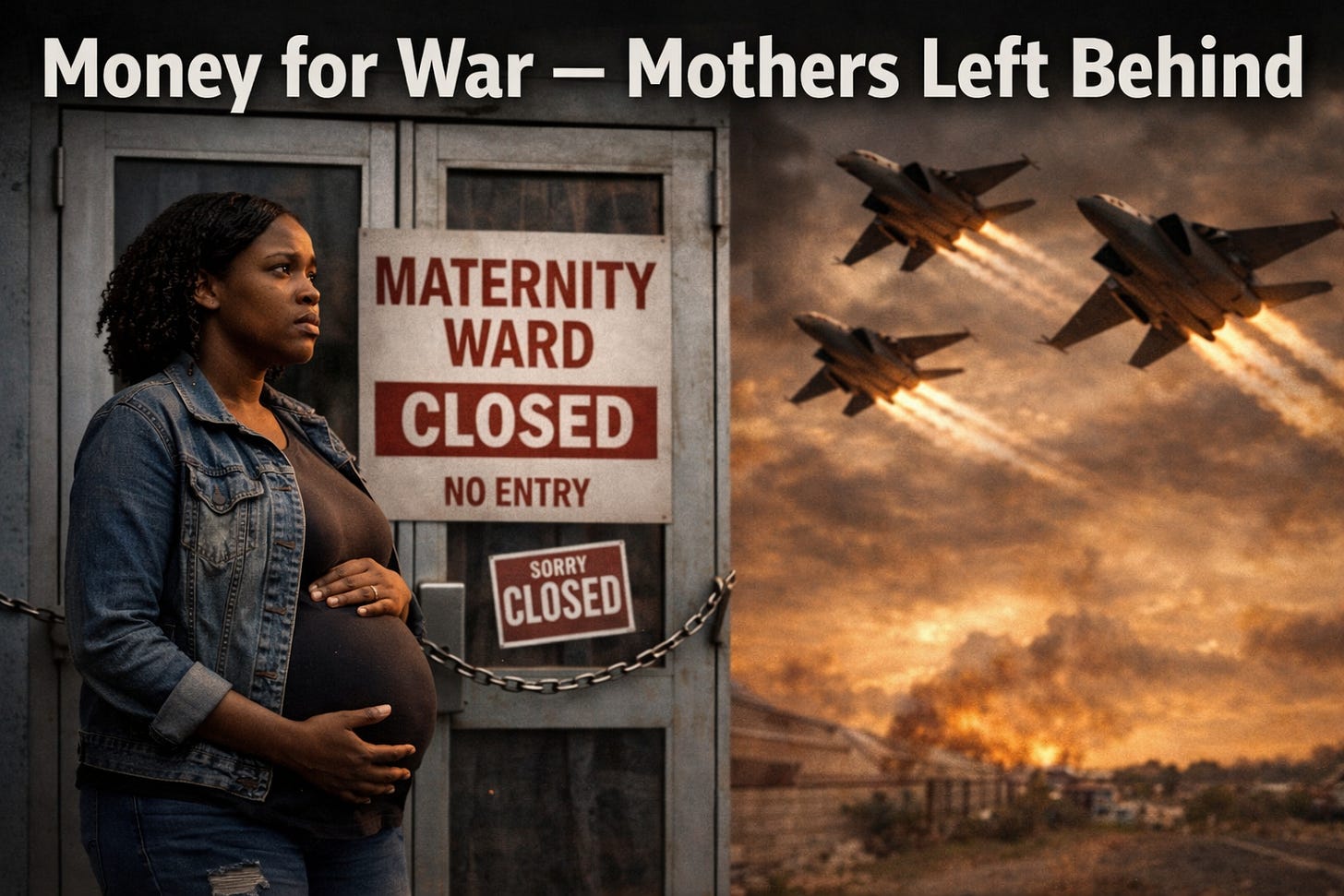
Is US-dominated World Order Now Dead?A comprehensive anti-imperialist analysis of modern geopolitics, exploring the role of Iran, the United States, Israel, and the Clash of Civilizations framework. Examines cultural identity, multipolarity, and the myths of American global dominance.

By Norris R. McDonald, DIJ
Author | Economic Journalist | Human Rights Advocate
SULFABITTAS NEWS, March 8, 2026
 |
| Norris R. McDonald, DIJ |
Throughout human history, the arc of power has never followed a straight line, nor has conquest ever resulted in permanent submission. Empires rise and fall, yet cultural memory, faith, and civilizational identity endure, often in ways that frustrate the ambitions of the most powerful states. 
In the twenty-first century, the United States, Israel, and Iran exemplify this paradox, revealing that political domination cannot extinguish the deeper forces that shape human society.
 |
| Rep. Thomas Massie |
Geopolitical Rivalry and the Power of Martyrdom
Massie’s observation captures a recurring paradox of modern geopolitics: when dominant states confront ideological or charismatic leaders whom they cannot control, those leaders often emerge as enduring symbols of resistance whose influence extends far beyond immediate military or political contests.
This dynamic has defined decades of confrontation between Iran and the Western-aligned regional order, led primarily by the United States and Israel. Sustained external pressure—through sanctions, military threat, diplomatic isolation, and covert operations—has repeatedly reinforced the symbolic authority of Iranian religious and political leadership across parts of the Muslim world.
Few figures embody this phenomenon more clearly than Ruhollah Khomeini, the cleric who led Iran’s 1979 Islamic Revolution.

Already revered by his followers as a religious and political thinker, Ayatollah Khomeini's brutal, cynical murder on February 28, 2026, by Israel and America, has now set the Middle East on fire.
Khomeini’s legacy was amplified by decades of confrontation with Western powers. The resulting narratives of martyrdom and resistance extend far beyond the borders of Iran, reflecting a broader struggle over sovereignty, identity, and the defense of civilizational values.
Geopolitical rivalry does more than reshape alliances; it produces enduring narratives that intertwine religion, history, and political legitimacy.
The confrontation between Iran, the United States, and Israel has repeatedly ignited wars, proxy conflicts, and humanitarian crises throughout the Middle East—from Iraq and Syria to Gaza and Lebanon—devastating cities, displacing millions, and reshaping regional alliances.
While these crises are often analyzed through conventional frameworks of military strategy and balance-of-power politics, they also reflect deeper tensions embedded in religion, culture, and civilizational identity.
From Post–Cold War Optimism to Civilizational Conflict
When the Soviet Union collapsed in 1991, Western observers heralded the apparent triumph of liberal democracy.
 |
| Professor Francis Fukuyama |
For a brief moment, this vision appeared plausible: the United States dominated globally, democratic transitions spread, and markets integrated across continents. Yet beneath this optimism, deeper currents persisted: religious identity, civilizational memory, and resistance to domination, which would ultimately challenge the notion of a permanent liberal order.

Samuel P. Huntington offered a different interpretation, emphasizing the enduring influence of civilizational identity. In his work The Clash of Civilizations and the Remaking of World Order, Huntington argued that future conflicts would be defined less by ideology and more by cultural, religious, and
historical fault lines.
This framework remains profoundly relevant today, as geopolitical crises increasingly intersect with questions of faith, identity, and historical memory.
Professor Louis A. Moyston’s Insight
 |
| Professor Louis A. Moyston |
In the Middle East, and across other regions confronting imperial influence, conflicts often transcend conventional strategic calculations, becoming moral and civilizational struggles that reflect a society’s historical memory and spiritual identity.
Globalization has not dissolved civilizational boundaries; it has sharpened them, turning political conflict into a struggle over identity and historical memory.
The Myth of the “One Don World Order”
From my perspective, the assumption that the collapse of the Soviet Union would result in an uncontested American-led world order was historically naive.
In my Jamaica Gleaner article, India, 'Imperialism, Fukuyama and the ‘One Don World Order’, I argued that concentrated authority inevitably generates resistance, and imperial ambitions provoke opposition from those defending sovereignty, resources, and culture.
Historical experience consistently demonstrates a central truth of global politics: systems of domination inevitably produce resistance. Empires may command enormous military and economic power, yet they repeatedly confront the same structural limitation—the refusal of subject peoples to permanently accept subordination.
Recent developments in West Africa illustrate this pattern. Across the Sahel, rising currents of Pan-African political consciousness have challenged the long shadow of French influence in the region. Movements emphasizing sovereignty, national dignity, and regional cooperation reflect a broader shift away from the structures of post-colonial dependency that defined much of the late twentieth century.
While the process remains incomplete, the growing rejection of external military presence signals an important transformation in political consciousness across parts of the continent.
The Limits of Empire and the Persistence of Resistance
This dynamic is not unique to Africa. Across the Global South, societies shaped by colonial history continue to resist forms of external domination—whether military, political, or economic. The struggles unfolding around the question of Palestinian self-determination, as well as ongoing tensions in the Middle East more broadly, reflect the enduring power of national identity, historical memory, and collective resistance.
Decades ago, the revolutionary thinker Frantz Fanon described such populations as the “wretched of the earth,” arguing that the experience of domination inevitably generates movements seeking dignity and liberation.

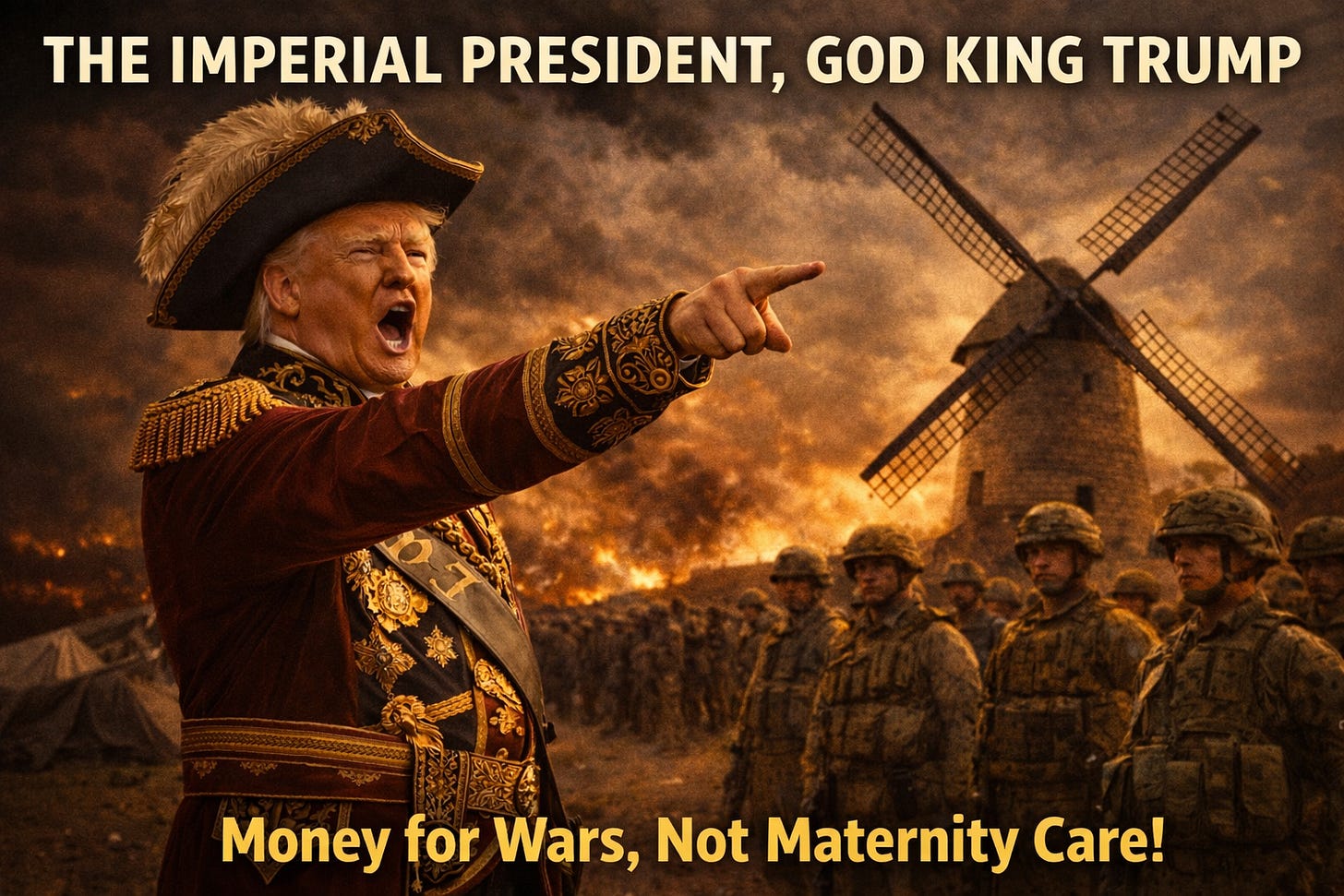
Donald Trump's Nietzschean God King Complex
Taken together, these developments highlight a broader historical lesson: empires rarely secure permanent global dominance. Military superiority can impose temporary order, but it cannot erase the cultural identity, historical memory, and political will of populations determined to resist.
The long arc of political struggle therefore points toward a recurring pattern. Wherever systems of domination attempt to entrench themselves indefinitely, they eventually confront organized opposition from those who refuse to accept their subordination as destiny. In this sense, the history of empire is also the history of resistance—and that resistance continues to shape the emerging political landscape of the twenty-first century.
 |
| President Donald Trump has a Nietzschean God King Complex |
The Emergence of a Multipolar World
Global politics is increasingly defined by multipolarity. China, under Xi Jinping, has leveraged economic strength and the Belt and Road Initiative to extend influence across continents, while BRICS has emerged as a platform for non-Western coordination.
NATO’s confrontations with Russia and the destabilization of Europe through energy crises highlight the fragility of Western dominance, while rising U.S. debt and skepticism about the dollar signal the erosion of unilateral power.
These developments underscore that the era of uncontested American global dominance is ending, giving way to a more contested multipolar international system.
The fantasy of a permanent ‘One Don World Order’ has collided with the enduring realities of multipolarity and civilizational resistance.

The contrast between Huntington and Fukuyama continues to frame contemporary geopolitical discourse.
 |
| Professor Samuel P. Huntington |
While Fukuyama envisioned ideological convergence, Huntington and Moyston remind us that civilizational identity, historical memory, and cultural resistance remain potent forces. Wars in the Middle East, geopolitical rivalry between rising powers, and enduring resistance to imperialist agendas repeatedly affirm the ongoing relevance of civilizational frameworks in understanding global politics.
A World Still Searching for Its Future
Three decades after the Cold War, the global system remains in flux. Imperial ambitions clash with civilizational identity, multipolar powers assert themselves, and economic, cultural, and political fault lines continue to generate conflict.

The world envisioned under a permanent “One Don World Order” has collided with enduring realities of resistance, multipolarity, and cultural assertion. The twenty-first century is likely to be defined not by the triumph of a single power but by ongoing negotiation, contestation, and civilizational assertion, in which empires are tested and the enduring relevance of faith, history, and identity shapes the trajectory of global politics.
History has not ended; it has entered a new and uncertain chapter. Those who wish to understand the unfolding world must recognize the interplay of empire, culture, and resistance in determining the shape of the global order for generations to come.
Call to Action
If this analysis resonates with your view of global politics, join the conversation. Subscribe to my Substack for in-depth commentary on international affairs, anti-imperialist perspectives, and the ongoing struggle between empire and civilizational identity. Share your thoughts, debate the ideas, and help build a community committed to understanding the forces shaping our world.
About the Author
Norris R. McDonald is an author, respiratory therapist, and economic journalist whose work focuses on political economy, public health, healthcare systems, and global public policy. He is a regular contributor of public commentary and analysis for the Jamaica Gleaner, where he examines the intersection of economics, governance, social justice, and development in Jamaica, the Caribbean, and the Global South.
With professional training in Economic Journalism and respiratory care and, decades of frontline healthcare experience, McDonald brings a clinical and evidence-based perspective to issues from global conflicts and foreign policy; to maternal mortality, health inequities, pharmaceutical policy, and healthcare access. His journalism blends data-driven analysis with historical and cultural context, particularly around Black communities, post-colonial development, and structural inequality.
McDonald is also the publisher of Sulfabittas Newsmagazine on Substack, where he produces investigative features, long-form essays, and geopolitical commentary on global power dynamics, economic sovereignty, and emerging multipolar realities.