Sunday, February 15, 2026

IMMIGRANTS, ICE DEATHS AND THE RISE OF THE ORWELLIAN SURVEILLANCE STATE!

... A feel-good Super Bowl ad exposed something darker: 
the quiet rise of a surveillance state powered by AI,
 corporations, and fear!


 Norris R. McDonald, DIJ, @sulfabittasnews (Updated April)


George Orwells' Nineteen Eighty-Four warned that the most dangerous moment is not when people are openly terrorized, but when they are persuaded that lies are normal and surveillance equals protection. 


The Orwellian Turn: Big Brother in Silicon Valley and the Newsroom

George Orwell warned in 1984 that when the Ministry of Truth dictates reality, freedom dies — not in one violent coup, but in the quiet erasure of inconvenient facts.


ICE And The Friendly Face of Tyranny

Orwell warned us: the worst moment isn’t open terror. It’s when people start believing lies are normal, and watching equals protection. Today’s Ministry of Truth State Terror representives appears as ICE Community Storm Troopers wearing Hoodies. 


The U.S. Governments lies to us and tells not not to believe videos showing the opposite of what they say,--- unjust public executions of Kieth Porter, Renee Nicole Good, Alex Pretti and other unwarranted actions.


This is the morphing of the once liberal democratic state into proto-fascism supported by Big billionaires, warped Corporate logic, and abused Artificial intelligence technology to build, maintain and strengthen the architecture of the American Surveillance State. 



  • Genocide? “Self-defense.”
  • Censorship? “Content moderation.”
  • Blacklists? “Community guidelines.”
  • Mass surveillance? “Public safety technology.”

The Poor, Immigrants and The Ministry Of Truth

Once words are stripped of moral weight, conscience soon follows. The message is unmistakable: War crimes are condemned only when committed by official enemies. 


When allies pull the trigger, the Ministry of Truth changes the language — genocide becomes “self-defense,” censorship becomes “content moderation,” and mass killings vanish into the algorithm.


Democracy, we were told, is a grand marketplace of ideas, a space where left, right, and center clash and refine policy through open debate. But what happens when a narrow ideological elite decides only its ideas are legitimate? 


Dissent is no longer argued against. It is quietly suppressed through de-amplification, demonetization, algorithmic burial, and platform bans. You are not imprisoned. You are simply erased. 


Surveillance never falls evenly. It concentrates where power has always focused its gaze: immigrants, the poor, protest movements, marginalized communities, and political dissidents. History shows that systems of control are never built to monitor the powerful. They are built to manage the powerless. 


The Corporate Big Brother New Coercion Model

Once surveillance infrastructure exists, abuse is not an unfortunate possibility. It is an eventual certainty. A new governing model is taking shape. Governments outsource coercion. Corporations provide the technology. Media provides the justification. Each claims the other is responsible. Accountability dissolves. 


This is not free-market capitalism and it is not liberal democracy. It is corporate authoritarianism: a system where unelected executives design the digital walls that quietly limit human freedom.


Fear is the engine that keeps this system running. Terrorism, crime, immigration, pandemics, and cyber threats are endlessly recycled to sell another layer of monitoring. An anxious population is a compliant population. A frightened society will trade liberty for reassurance every time.


Law Without Justice Is Dangerous

Each generation trades privacy for safety. Cameras in stores. License-plate readers on highways. Facial recognition at airports. Smart devices in your home. Each step seems small. Together, it builds a panopticon mapping your every movement, purchase, association—even emotion. Secret police? Not needed. Just data centers and software updates.


History is blunt: surveillance never watches the powerful. It targets the poor, immigrants, protesters, dissidents, and marginalized communities. Abuse isn’t a bug—it’s the product.


The greatest danger is not that cameras exist. It is that people begin to believe constant monitoring is moral. That privacy becomes suspicious. That anonymity becomes dangerous. That freedom itself starts to look like a threat. Once a society accepts those ideas, it no longer needs chains. It will police itself.


Surveillance State in America

This is not an isolated marketing choice. It is part of a much bigger picture: the slow, steady, and deliberate construction of a surveillance state across America and much of the liberal West. Not with jackboots or martial law, but with apps, subscriptions, convenience, and “safety features.” Big Brother no longer arrives as a dictator. Big Brother arrives as a service.


What is unique about the present period is the general disdain President Donald Trump and members of his cabinet have shown to respect the rule of law. Justice and human rights appears as an irrational burden. And what we saw play out with the Tech billionaires gathered around him at his January 20, 2025, now appears to be playing out in their oversized role in the new Surveillance state. 


The Friendly Face of Tyranny

Each step feels small. Together, they form an architecture of total visibility, a system capable of mapping movement, association, purchasing habits, political expression, and emotional patterns in real time. What once required secret police now requires only data centers and software updates.


This poses extreme dangers for democracy and the rule of law.  Every generation is sold its own version of the same lie: surrender a little privacy and you will gain a lot of safety. It begins with cameras in stores, expands to license-plate readers on highways, spreads to facial recognition in airports, and finally settles on smart devices mounted to private homes.


Big Tech, Big Government, Big Brother Is Here!


In Orwell’s novel, Big Brother was loud, brutal, and omnipresent. In today’s version, Big Brother is friendly. It sends notifications. It updates automatically. It smiles. It does not demand obedience. It trains behavior. That is far more effective.


This moment is not about rejecting technology. It is about insisting that technology serve human freedom rather than erase it. Without strict limits, real consent, transparent algorithms, and enforceable accountability, the future is already being coded. And once code becomes law, changing it is far harder than overturning any statute.


Big Brother is no longer coming. Big Brother is already here. The only remaining question is whether people will recognize him before they forget what freedom ever felt like.


That’s the Bitta Truth.


BOOKS... Historical Fiction & Political Parody:

The True Life Story of King Musk Rat and Ronald The Snake: The Rise and Fall of American Dystopia 


GET NORRIS R. McDONALD'S HISTORICAL & POLITICAL PARODY THAT, IN THE SPIRIT OF GEORGE ORWELL'S '1984' AND 'ANIMAL FARM, "IN AN UNCANNY WAY PREDICTED ALL THE PRESENT EVENT!  


GET THE BOOK HERE ðŸ‘‰ https://www.amazon.com/True-Life-Story-Ronald-Snake-ebook/dp/B0DXJB337C/


Saturday, February 14, 2026

GERMANY UNDER MERZ HAS BECOME EUROPE’S SICK OLD MAN!

MERZ'S IMPERIAL FANTASY BRINGS CHAOS! 
 ....Guns For War ... Hunger For Workers ...

Nord Stream, energy shock — and now Volkswagen’s historic rupture...


By Norris R. McDonald, DIJ, Author, Economic Journalist

@sulfabittasnews (Updated, MARCH 28, 2026)


Norris R. McDonald, DIJ
Germany for decades was the industrial engine of Europe. Its factories powered the continent’s prosperity. Its export machine set global standards in automobiles, chemicals, precision tools, and industrial machinery. Its social market economy balanced capitalism with worker protections in a way many nations tried to emulate.


Today, that model is under severe strain. 


Germany faces a structural economic rupture driven by energy shock, geopolitical alignment, and strategic miscalculation. The destruction of the Nord Stream pipelines in 2022 was not simply an infrastructure event — it was an economic turning point. Those pipelines delivered the cheap and reliable Russian gas that underwrote Germany’s industrial competitiveness for decades.


The German working class are going through extremely hard times not seen since the Post World War II era. 


Cheap Russian Gas Fueled Germany's Industrial Base

Before 2022, roughly 55 percent of Germany’s natural gas came from Russia. That supply sustained energy-intensive sectors — chemicals, steel, fertilizers, glass, aluminum, autos. When it vanished, Germany did not just lose fuel. It lost cost stability.


The shift to higher-priced liquefied natural gas and emergency substitutes has kept industrial energy costs elevated compared to pre-war levels. For globally competitive manufacturing sectors, margins matter. And when margins collapse, relocation becomes rational.


Industrial production has weakened. Investment has slowed. Executives increasingly explore expansion in the United States or Asia rather than at home. Economists describe “structural demand destruction.” Workers experience something simpler: layoffs, reduced shifts, and long-term uncertainty.


Nord Stream and the Energy Shock

Energy is the bloodstream of industrial society. Germany’s post-Cold War growth model rested on abundant, affordable gas feeding vast manufacturing ecosystems.


The bombing of Nord Stream abruptly severed that lifeline. What followed was not a short-term adjustment but a permanent increase in operating costs for German industry.


This shock ripples outward. Higher energy prices raise production costs. Higher production costs reduce competitiveness. Reduced competitiveness accelerates offshoring. Offshoring erodes employment, tax revenue, and industrial know-how. Once this cycle takes hold, reversing it becomes extremely difficult.


Volkswagen and the Symbolism of an 84-Year Pillar

Nowhere is Germany’s vulnerability more symbolically visible than in the crisis facing Volkswagen.


For 84 years, Volkswagen has stood as a pillar of German industrial identity. From the Beetle to the Golf, from Audi engineering to Porsche performance, the company anchored vast supply chains across Europe. Entire regions depend on its plants.


 Volkswagen, once a great symbol of Germany's industrial might, has now collapsed. 


Today, Volkswagen confronts weak European demand, fierce Chinese competition in electric vehicles, high domestic production costs, and the broader energy burden weighing on German manufacturing.


Reports of restructuring, potential plant closures, or severe cost-cutting represent more than corporate belt-tightening. They signal that even Germany’s most iconic manufacturers are struggling to remain competitive at home.


If Volkswagen cannot comfortably produce profitably in Germany, the implications extend far beyond one company. They point to a system-wide problem.


Deindustrialization in Slow Motion

Chemical producers have cut output. Steelmakers warn of permanent capacity losses. Fertilizer and aluminum plants have shut down or relocated.


Economists increasingly acknowledge that Germany is experiencing “structural demand destruction” — a polite term for factories that will never reopen.


This is not a normal business cycle. It is deindustrialization in slow motion.

Germany now risks developing its own Rust Belt along the Rhine.


Rearmament Without an Industrial Base

Berlin’s political leadership speaks confidently about transforming Germany into the strongest military power in Europe.


But military strength rests on industrial strength. Tanks, aircraft, drones, ammunition, and advanced electronics require factories, skilled labor, and affordable energy.


A shrinking manufacturing base cannot sustain long-term military ambitions.


The contradiction is stark: Germany is asked to shoulder greater geopolitical responsibility while its productive core erodes.


Social Democracy Under Pressure

Germany’s postwar stability rested on an implicit bargain: industrial strength would generate rising living standards and fund social protections.


That bargain is fraying.


Households face higher energy bills. Rents rise. Public infrastructure ages. Job insecurity spreads.


Russian cheap Nord Stream gas once have Germans a better quality of life than most Europeans. 


As economic security weakens, political polarization grows. The erosion of social democracy follows the erosion of industrial confidence.


Geopolitics and Double Standards

Ukraine is framed as an existential moral cause. Gaza exposes glaring double standards in how civilian suffering is judged.


Principles appear selective. Credibility erodes.


For Washington, Europe’s break from Russian energy advances long-standing strategic objectives. For Germany, the economic price has been devastating. Energy independence from Moscow has translated into dependence on higher-cost imports and reduced industrial competitiveness.


A Choice Still Exists

Germany still possesses extraordinary assets: world-class engineers, research institutions, skilled workers, and a respected industrial brand. But assets require strategy. Without a coherent plan for affordable energy, competitive production, and genuine strategic autonomy, Germany’s decline will deepen.


History shows that great economic powers rarely collapse overnight. They decay through accumulated policy choices.


If icons like Volkswagen stumble after 84 years, the warning could not be clearer. Germany must decide whether it intends to remain an industrial nation — or accept managed decline dressed up as moral virtue.

 Final Word

Germany is entering a new era where defense—not fiscal restraint—defines national policy. The 2026 budget underscores a decisive pivot toward military strength, industrial mobilization, and geopolitical influence in Europe.


That is the Bitta Truth.


Friday, February 13, 2026

President Trump Marches On A New Political Crusade Against Cuba

When energy becomes a weapon, suffering becomes policy!


Sulfabittas News reports on major Caribbean and global political developments affecting Jamaica and the wider region...

Kingston, Jamaica — @sulfabittas News


Breaking news on Cuba’s deepening energy crisis as U.S. sanctions block Venezuelan and Mexican oil supplies, trigger jet fuel shortages and rolling blackouts, and spur international responses from Mexico, China, and Russia. Latest updates, analysis, and impact for Cuba, Caribbean travel and global geopolitics.


Latest Verified Developments

• U.S. Oil Blockade and Tariffs Intensify Pressure
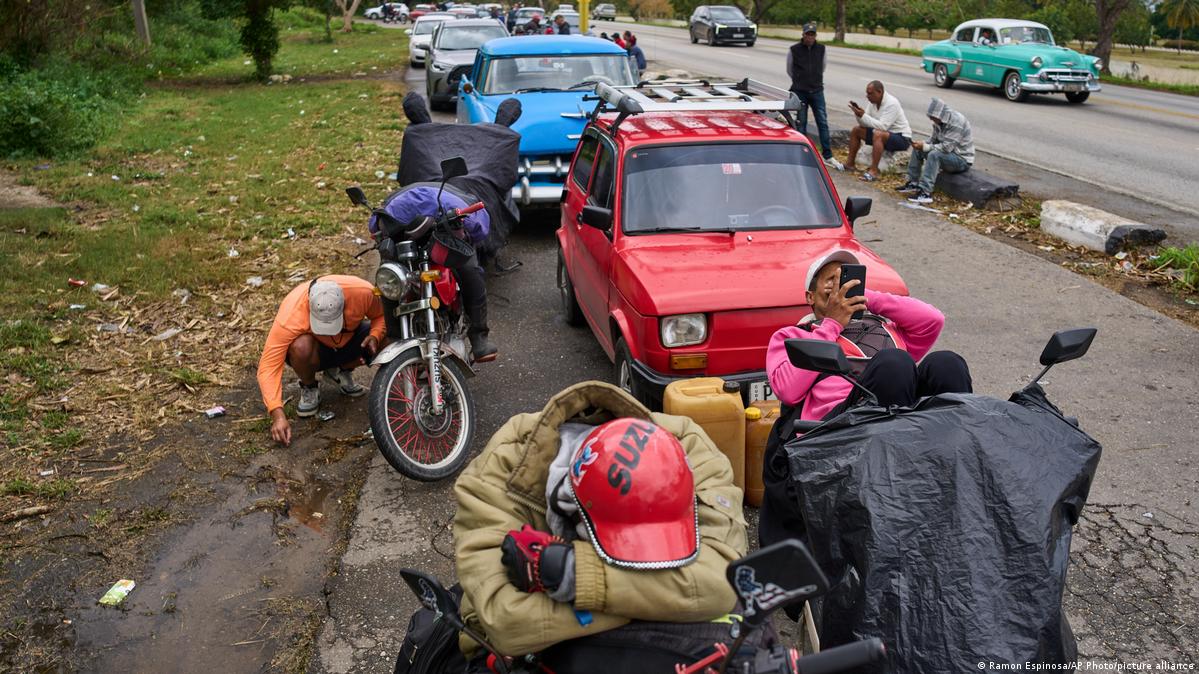
The Trump administration’s intensified sanctions and tariff threats have effectively stopped Venezuela — Cuba’s main oil supplier — and pressured Mexico to curb shipments, causing severe fuel shortages.

• Jet Fuel Shortages Halt Flights
Cuba announced aviation fuel shortages at nine airports, leaving airlines unable to refuel on the island until at least mid-March and forcing flight cancellations and reroutes that hit tourism hard.

• Humanitarian Aid and Geopolitical Response
Mexican navy ships carrying humanitarian food aid have arrived to ease shortages, even as Mexico walks a diplomatic tightrope with Washington. China vows to assist Cuba with supplies, and Russia plans fuel shipments that could defy U.S. tariffs.


U.S. imposed economic hardships have worsened Cubans daily life. 


President Trump’s latest sanctions escalate decades-old U.S.–Cuba tensions and follow broader U.S. moves affecting Venezuela’s leadership and oil industry — a strategy with far-reaching consequences for Cuban civilians, tourism, and regional geopolitics.


International responses are mounting: Mexico provides vital aid, while China and Russia reject what they call unilateral U.S. pressure. The crisis now threatens not just fuel systems but food, healthcare and civil stability across the island.


**********

BOOKS BY CARIBBEAN AUTHORS... 

PEENIE WALLIE: THE GLOW OF A FOOL'S LIGHT!: The true life story of a young boy misunderstood but destined to shine


By Norris R. McDonald 

The Jamaican African Coromantee Maroon spiritual ancestors still continues to shine a bright light forward like "Peenie Wallie's" fireflies! "Peenie Wallie" setting is in the rural, St. Mary, Jamaica community where the land tells stories of hope, that emerges from the souls of Black Jamaican people. "Peenie Wallie" explores themes such as: rural poverty, internal migration, hardships, sacrifice, self-motivation, self-development, education, love, kindness, hope, traditions and community spirit versus selfishness. The book tells this story through the eyes of the protagonists:

- Aunt Sissy
- Peenie Wallie and his fireflies
- Mass Moses, a Maroon spiritual leader
- Sheldon, their benefactor.

This busy-buzzing life of the hard-working people of Epsom District, St. Mary, reflects the hope and joy for a prosperous future for the Jamaican people.

The small village of Epsom, once a symbol of hardship, had transformed into a thriving community thanks to the education programs and opportunities he had championed. Many of the village’s children went on to achieve greatness, inspired by his example. "The Glowing House of Epsom" and Peenie Wallie legacy became a cultural landmark, visited by people from all walks of life. Inside its walls, photographs and awards told the story of Peenie Wallie’s journey and that of Aunt Sissy.

The lush gardens outside were filled with blooming flowers—a tribute to the natural picturesque beauty of Epsom, St Mary that had brought Peenie Wallie and Aunt Sissy together and had shaped their ‘Sulfabittas’ life. Peenie Wallie’s fireflies became an enduring symbol of hope.