
By Norris R McDonald | SULFABITTAS NEWS
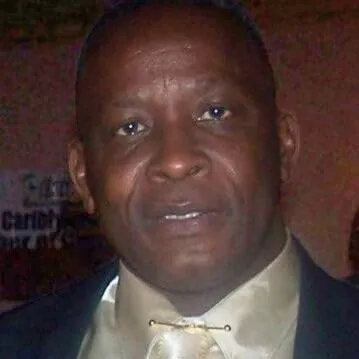 |
| Norris R. McDonald |
Africa has awoken. The continent, long
shackled by the chains of imperialism and neocolonial exploitation, is now
rewriting its own future. In Burkina Faso, Ibrahim Traoré is not merely a
leader—he is the embodiment of the liberation struggle, using the country's
vast gold resources to challenge imperialist control and reshape the nation’s
destiny.
The Rejection of Neocolonial Dependency
For centuries, Africa has been the world's
treasure chest—rich in natural resources, yet bound by the shackles of
exploitation. From gold to oil, Africa has supplied the West with raw wealth,
while its people remain mired in poverty. Colonial extraction economies left
behind only debts, dependency, and unfulfilled promises of development. But
this cycle is now being upended, and Burkina Faso stands at the forefront of
this movement.
Ibrahim Traoré, a bold leader driven by Pan-African principles, is leveraging Burkina Faso's gold not as a tool for foreign profiteers, but as a means for national and continental liberation. With the exit of French forces from West Africa, the continent's chances for true self-determination have expanded. Traoré’s vision goes beyond mere economic growth—it seeks to dismantle the exploitative systems that have kept Africa in perpetual servitude.
That cycle is being challenged. With France being kicked out of West Africa the people of the region now have a chance to thrive.
Pan-Africanism Reborn: Marcus Garvey’s Legacy
in Action
In the words of Marcus Garvey, "Africa
must belong to Africans, not symbolically, but materially." This was not a
call for mere independence, but for economic ownership, control over trade, and
mastery of industry. Today, Garvey's doctrine resonates in Ouagadougou, where
Traoré’s administration is determined to control the gold, refine the
gold, build the roads, and industrialize the nation.
The spirit of Pan-Africanism that Garvey envisioned is no longer a distant dream. It is a living reality in Burkina Faso, where gold is no longer just an export commodity, but the key to economic self-reliance and national sovereignty.
AS MARCUS GARVEY ONCE SAID .... 👇

Today we are living to see the present African Generation nobly carrying the Pan African spirit.
Breaking the Chains: Abolishing Neocolonial
Dependency
Burkina Faso’s record gold production is no
longer a statistic for foreign shareholders to profit from. Under Traoré’s
leadership, it has become the bedrock of national reconstruction. The Burkina
Faso government is expanding domestic refining capacity, enforcing stricter
state oversight on mining contracts, and ensuring greater transparency in how
gold revenues flow.
This is wealth retention in action. The
gold that once flowed out of Africa with minimal value-added processing is now
being transformed into infrastructure, roads, airports, and manufacturing
capacity. This is not cosmetic development—this is economic emancipation
manifested in concrete and steel.
Transport corridors are being expanded,
reducing the internal fragmentation that colonial powers deliberately designed
to benefit their own economies. Each road, each airport, is a direct
confrontation with the colonial geography that sought to divide Africa
for extraction, not integration. These new projects are more than
infrastructure—they are symbols of economic sovereignty and unity.
Industrialization: From Raw Materials to
Self-Sufficiency
For too long, Africa has been relegated to the
role of a raw material supplier in the global economy. Finished goods,
often imported at inflated prices, have perpetuated dependency. But Traoré’s
strategy centers on reversing this dynamic.
By prioritizing local refining, agro-processing,
and domestic manufacturing, Burkina Faso is moving from an exporter of unprocessed
ore to a producer of finished products. This industrialization
strategy is a direct challenge to the imperialist logic that has kept
Africa’s economies subordinate within global value chains.
This shift is unapologetically anti-imperialist
and anti-colonial. It rejects the notion that African economies must
remain subjugated within global systems of extraction. However, this is not
about isolation—it is about reclaiming economic agency.
Burkina Faso's engagement with international finance is not a departure from global interaction, but a reframing of priorities. The emphasis is on national capacity, fiscal discipline, and climate-resilient investment that builds local industries instead of reinforcing dependency.
The Spirit of Sankara: A New Dawn of
Self-Reliance
The legacy of Thomas Sankara lives on in the leadership of Ibrahim Traoré. Sankara’s call for dignity—"we must live dignity, not negotiate it"—echoes through every policy and initiative spearheaded by Traoré. The boldness of Sankara’s vision is being revitalized, as Burkina Faso steps away from colonial-era structures and embraces its economic sovereignty.

Traoré’s governance is firmly rooted in the twin principles of self-reliance and industrial policy. This is the same vision that Kwame Nkrumah outlined in his warning: political sovereignty without economic control is fragile. Traoré’s commitment to economic independence ensures that Burkina Faso’s political sovereignty is unshackled from external control.
Power to the People: Building the Future with
African Resources
Across the continent, Africans are beginning
to ask the critical question: Why do mineral-rich nations remain impoverished?
Why do foreign debts outweigh social investments? And why have external forces
historically dictated Africa’s economic terms?
The answer is clear: Africa must reclaim
control over its resources. Wealth generated from African soil must stay
in Africa to fund its own development. Burkina Faso is showing the
way. Build refineries. Build roads. Build factories. Build economic systems
that capture and retain national wealth.
This transformation is a people’s
revolution. It is power to the people—not the multinational
corporations or foreign governments that have long controlled the continent’s
destiny. Burkina Faso, under Traoré’s leadership, is reclaiming its resources
and, in doing so, is offering a model for the entire continent.
Africa’s Resources, Africa’s Future
The message is unambiguous and powerful: Africa
will mine its gold, refine its gold, and build with its gold.
The continent is no longer merely a supplier of raw materials for foreign
consumption. It is becoming a producer of value, a creator of wealth, and a
force for global economic change. The world will no longer dictate Africa’s
terms.
In Conclusion: A New Era for Africa
The dawn of a new African consciousness is
upon us. It is a consciousness grounded in the belief that Africa’s resources
should serve African people. The economic systems of exploitation and
dependency are being dismantled, piece by piece. As Burkina Faso leads the
charge, the message is clear: Africa is building its own future, with
its own resources, on its own terms.
ABOUT THE AUTHOR:
Norris R. McDonald is an Author, Respiratory Therapist, and Economic Journalist who writes on Pan-Africanism, anti-colonial struggles and industrialization in public commentary features for the Jamaica Gleaner. He covers issues related to Political Economics, Health Care & Public Policy, Black Culture, and World Affairs. He is also the publisher of SULFABITTAS NEWSMAGAZINE on SUBSTACK.
***********************************
For centuries, Black people have been told that their suffering is divine punishment—ordained by God and passed down through a mythical “ancestral curse.”

In this powerful, eye-opening work, Norris R. McDonald, DIJ, dismantles one of the most enduring and damaging lies in Christian history: the so-called Curse of Ham. From the hymnals of colonial churches to the halls of modern academia, this myth has been used to justify slavery, colonization, and systemic racism.
With clarity, historical depth, and spiritual conviction, McDonald traces how scripture was distorted, how Black history was erased, and how liberation must begin with truth.
Title: The Myth of the Ancestral Curse
Author: Norris R. McDonald, DIJ
- Healing the psychological scars of slavery and colonialism.
- Tribute to Prof. Sheldon Uwezo McDonald
- Debunking the Curse of Ham myth used to enslave Black people.
.png)
- Exposing how religion was weaponized for racial oppression.
- Deconstructing the Curse of Ham, Colonial Lies, and the Struggle for Black Liberation
- How Slavery, Religion, and Myth Created Generational Trauma—and How We Break Free
- Unmasking Religious Racism and Reclaiming Black Spiritual Freedom
.png)
